
Manomera
Rehn & Hebard, 1907
blatchley walkingstick, slender-bodied walkingstick
Species Guides
3- Manomera blatchleyi(Blatchley Walkingstick)
- Manomera brachypyga(Short-Rumped Walkingstick)
- Manomera tenuescens(Slender-bodied Walkingstick)
Manomera is a of walkingsticks in the Diapheromeridae, established by Rehn and Hebard in 1907. The genus contains at least three described found in North America: M. blatchleyi, M. brachypyga, and M. tenuescens. These insects are characterized by their elongated, stick-like bodies typical of phasmids. The genus is part of the diverse Diapheromeridae family, one of the largest families within the order Phasmida.
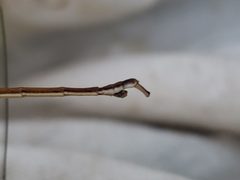
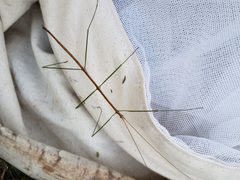
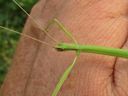
Pronunciation
How to pronounce Manomera: //ˌmænoʊˈmɛrə//
These audio files are automatically generated. While they are not always 100% accurate, they are a good starting point.
Identification
in Manomera can be distinguished by subtle differences in body proportions and terminal abdominal structures. Manomera blatchleyi and M. tenuescens have suggesting body form differences ('blatchley' versus 'slender-bodied'). M. brachypyga is distinguished by its relatively short (the plate of the last abdominal segment), as indicated by its species epithet. Detailed examination of genitalia and is required for definitive species identification.
Images
Distribution
North America. Distribution records from GBIF indicate presence across Northern America, with observations spanning multiple regions of the continent.
Similar Taxa
- DiapheromeraBoth are in the Diapheromeridae with similar overall body plans. Diapheromera are generally more widespread and better studied; Manomera species tend to be more regionally restricted and require examination of terminal abdominal structures for separation.
- ParabacillusAnother diapheromerid with overlapping North American distribution. Parabacillus often have more pronounced body ornamentation or spination compared to the relatively smooth-bodied Manomera.
More Details
Taxonomic history
The was described by Rehn and Hebard in 1907, with originally placed in other genera subsequently transferred to Manomera. The type species is Manomera tenuescens, originally described as Bacillus tenuescens by Scudder in 1900.