
Stilpnochlora couloniana
(Saussure, 1861)
Giant Katydid
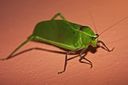
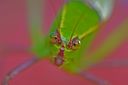
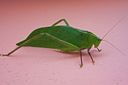
Stilpnochlora couloniana, commonly known as the giant , is the largest katydid in the United States and the only member of the tribe Steirodontini native to the country. This phaneropterine katydid is notable for its substantial size, with females reaching up to 7.8 cm and males 6.6 cm on average. in Cuba tend to be 5–10% larger than those in the United States. The species is occasionally kept in captivity as pets.
Pronunciation
How to pronounce Stilpnochlora couloniana: //stɪlpnoʊˈklɔːrə kuːˌloʊniˈænə//
These audio files are automatically generated. While they are not always 100% accurate, they are a good starting point.
Identification
Distinguished from other North American katydids by its exceptional size—substantially larger than common such as Microcentrum rhombifolium (Greater Angle-wing Katydid), which reaches only 52–63 mm. The only Steirodontini member in the United States, separating it from all other native phaneropterines. Cuban may be confused with other large Caribbean katydids but are identifiable by geographic origin and morphological consistency with the species.
Images
Appearance
Large, robust with uniformly green coloration. males average 6.6 cm (2.6 in) in length; adult females average 7.8 cm (3.1 in). Individuals from Cuba are 5–10% larger than those from the United States. The exhibits typical phaneropterine with elongated wings and body form consistent with leaf-mimicry strategies common in the .
Habitat
Native range includes subtropical and tropical environments in Florida, Georgia, the Bahamas, and Cuba. Specific microhabitat preferences within these regions are not well documented in available sources.
Distribution
Southeastern United States (Florida and Georgia); the Bahamas; Cuba. The only Steirodontini native to the United States.
Human Relevance
Occasionally kept as pets in captivity. No documented economic or agricultural significance.
Similar Taxa
- Microcentrum rhombifoliumAlso called 'giant ' by some sources and shares large size, but S. couloniana is distinctly larger (66–78 mm vs. 52–63 mm) and belongs to a different tribe (Steirodontini vs. Microcentrini)
More Details
Size variation
Cuban consistently exceed United States populations in size by 5–10%, suggesting geographic variation in growth patterns or environmental influences on development.