Spharagemon collare
(Scudder, 1872)
Mottled Sand Grasshopper
Spharagemon collare, commonly known as the mottled sand , is a bandwinged grasshopper inhabiting sandy-soiled grasslands of northern and western North America. are present from July through September, with a five-stage nymphal development period of at least 42 days. The species exhibits , foraging primarily on the ground surface. densities typically remain low, though localized increases can occur in disturbed sandy loam .
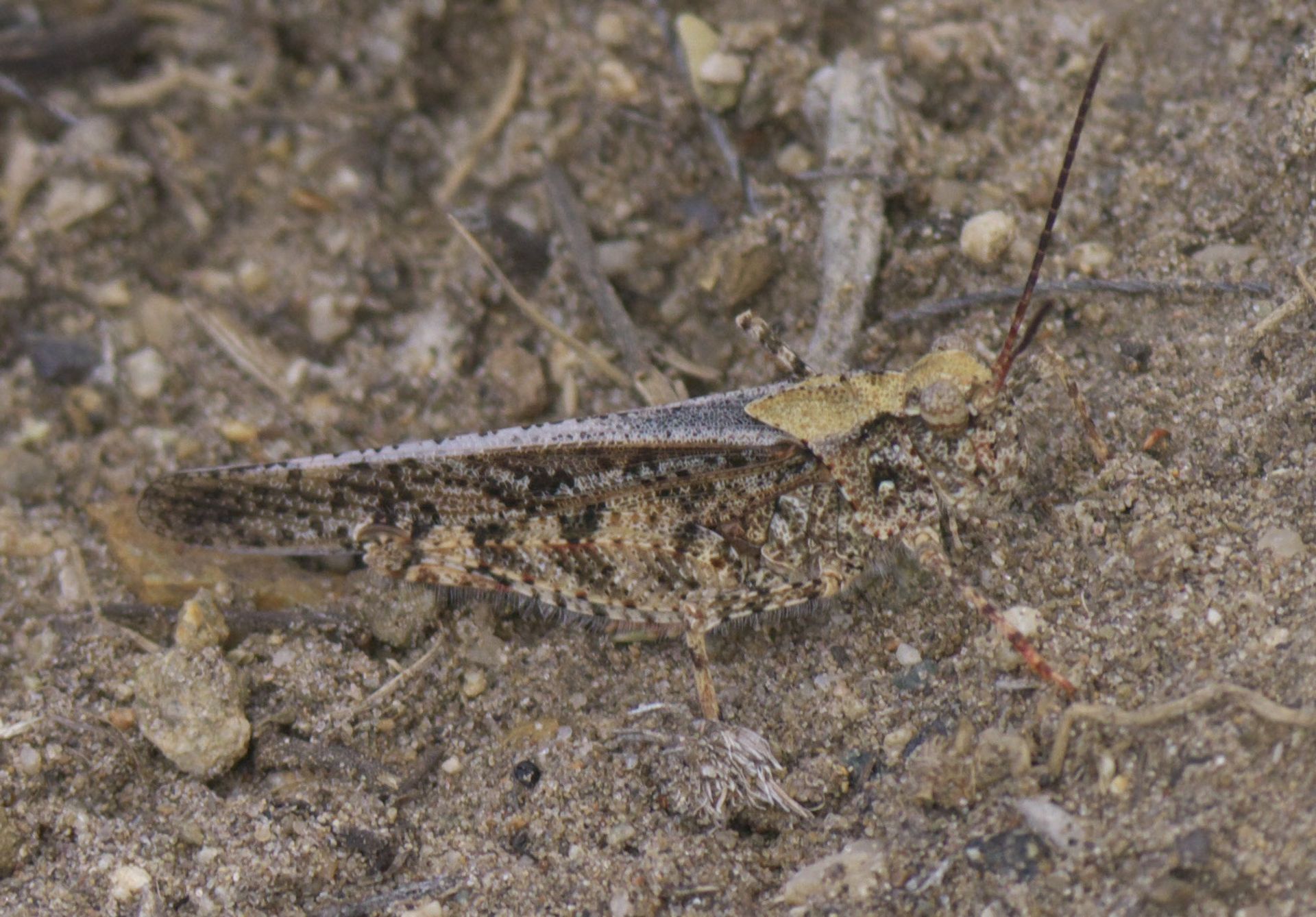
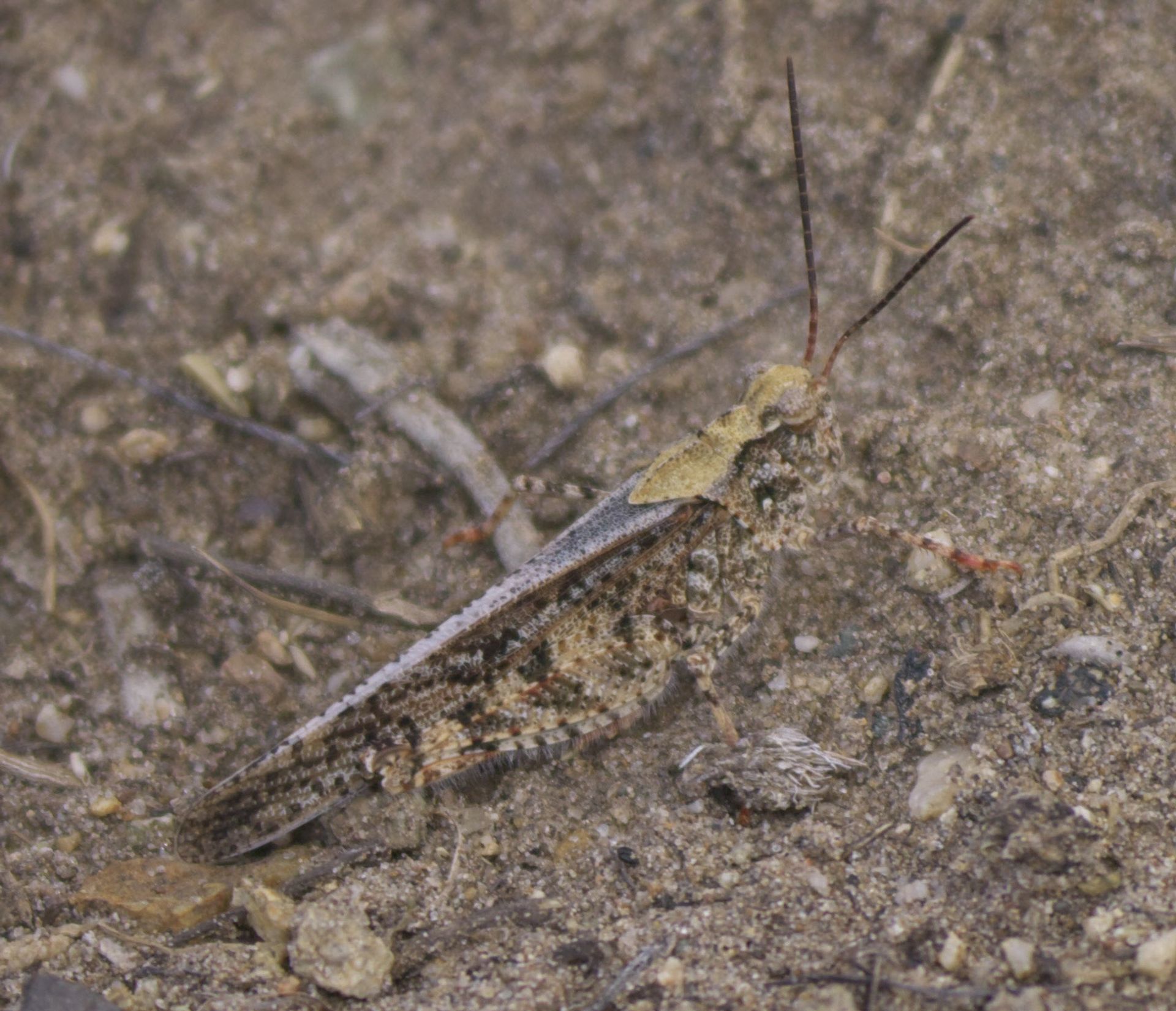
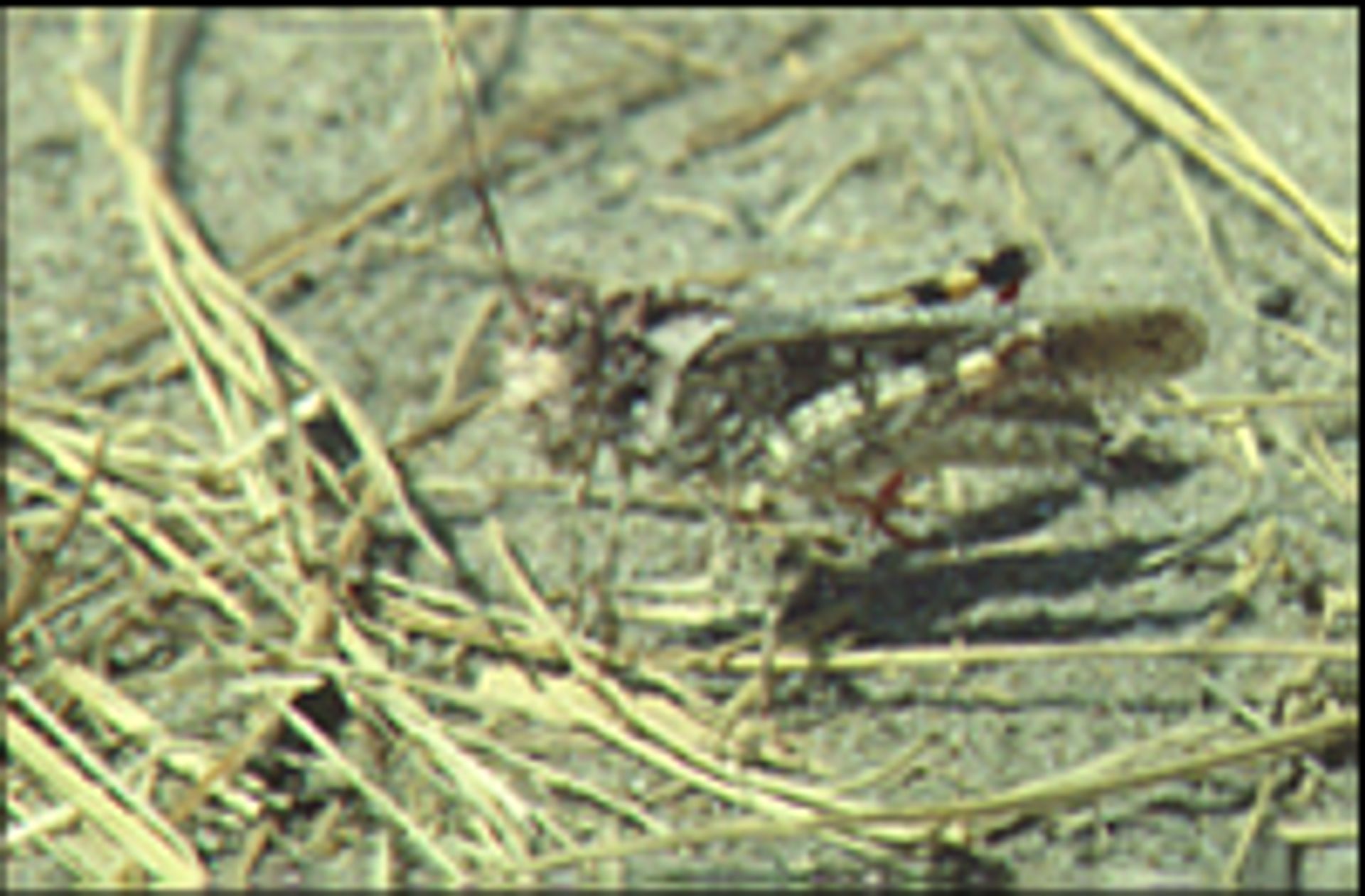
Pronunciation
How to pronounce Spharagemon collare: /sfɑːrəˈɡɛmən kəˈlɑrɛ/
These audio files are automatically generated. While they are not always 100% accurate, they are a good starting point.
Identification
The collar-like pronotal ridge distinguishes this from most grasshoppers. The combination of high, deeply incised pronotal carina, orange to red hind tibia, and yellow hind with four dark bands separates it from sympatric Spharagemon species. Spharagemon cristatum has a more pointed pronotum with higher crest and longer forewings (>29 mm in males); S. equale occurs in loam to clay soils rather than sandy . Nymphs are identifiable by tan color with profuse brown spots, elevated pronotal carina with shallow notch, and distinctive hind leg color patterns progressing through instars.
Images
Appearance
are tan to gray with heavy brown speckling that may coalesce into faint bands. The enlarged pronotal ridge behind the forms a distinctive collar-like structure. The carina of the pronotum is high and deeply incised once to the middle. Wings extend 6–9 mm past the tip; forewings are speckled to banded, while hindwings display wide yellow and black bands with a clear wing tip. The hind tibia is deep orange or red; the inner of the hind is yellow with four dark transverse bands. Females measure 27–37 mm in body length; males are smaller at 23–31 mm.
Habitat
Sandy soil with sparse grass and forb cover, including sand prairies, sand blowouts, and sandy banks of lakes and streams. In the West, inhabits sand prairie dominated by tall grasses such as sand bluestem and prairie sandreed. sandy loam sites including wheat field edges, roadsides, and other disturbed areas support unusually high densities. Rare in grasslands with loam to clay soils.
Distribution
Northern and western United States and southern Canada. Documented in Colorado, Illinois, Indiana, Massachusetts, Kansas, Oklahoma, Texas, New Mexico, Michigan, Wyoming, Idaho, Nebraska, and Manitoba. Also recorded in northeastern Mexico.
Seasonality
Nymphs emerge late May to mid-June over a 23-day hatching period. present July through September. Minimum nymphal development period is 42 days, with males developing faster than females.
Diet
herbivore consuming grasses, sedges, and forbs. Primary grasses and sedges include blue grama, needle-and-thread, western wheatgrass, sand dropseed, witchgrass, and threadleaf sedge. Heavily consumed forbs include kochia and Missouri milkvetch. Additional recorded foods: sand bluestem, little bluestem, prairie sandreed, buffalograss, hairy grama, junegrass, sun sedge, Baltic rush, sand sagebrush, western sticktight, sunflower, redroot pigweed, bracted spiderwort, rusty lupine, western ragweed, Kentucky bluegrass, penstemon, and lettuce.
Life Cycle
are deposited in sand approximately 13 mm deep in pods 19 mm long by 5 mm diameter, containing 21–28 tan eggs each 5–5.2 mm long. Oviposition lasts approximately 34 minutes; eggs are covered with sand by brushing with hind . Five nymphal instars; extended hatching period results in overlapping instar stages. Males progress through instars faster than females.
Behavior
: lives and forages on ground surface, resting horizontally on ground litter or under grass overnight. Climbs grass stems only to cut pieces for consumption, handling food with front while resting horizontally. Basks at dawn and dusk by exposing perpendicular to sun rays with hindleg lowered; seeks shade during peak heat, stilting on bare ground at soil surface temperatures of 105°F. is straight with right-angle turns at start or end; males crepitate when escaping danger or approaching females. Males stridulate with one to two pulses when courting; unreceptive females reject males by shaking hind and striking ground with hind tarsi.
Ecological Role
Herbivore in sandy grassland . densities typically low (0.1–1 per square yard), limiting overall impact. Serves as prey for grassland birds including sparrow and western meadowlark, with avian documented as a significant population control factor.
Human Relevance
Minor pest of wheat and other grains; rarely reach damaging levels. Can achieve densities of 10 per square yard in disturbed sandy loam areas, presenting hazard to newly seeded crested wheatgrass in Idaho. Not considered a serious economic pest due to characteristically low population densities.
Similar Taxa
- Spharagemon cristatumOverlaps in range but has more pointed pronotum with higher crest, longer male forewings (>29 mm), and more frequent male stridulation; occurs in more southern areas.
- Spharagemon equaleOccurs in loam to clay soils where S. collare is rare; closely related but ecologically segregated.
- Spharagemon bolli inhabit sunny meadows and pine openings rather than sand prairies; nymphs likely similar but unstudied.
More Details
Population Dynamics
Historical data from Nebraska Sand Hills (1800s) show densities of 0.01–0.2 per square yard, with avian as primary limiting factor. Wyoming surveys recorded up to 5 adults per square yard in 1992.
Dispersal
Strong flier with wings extending well past . Documented as 'accidental' at high altitudes to 12,200 feet in Colorado, 22 miles from nearest resident , suggesting potential for long-distance movement.