
Heliastus
Saussure, 1884
Species Guides
2- Heliastus benjamini(Arroyo Grasshopper)
- Heliastus subroseus(rose-wing beach grasshopper)
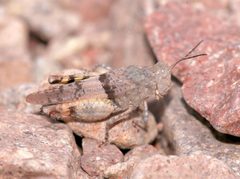
Heliastus is a of band-winged grasshoppers in the Acrididae, containing approximately 10 described . The genus was established by Saussure in 1884 and belongs to the Oedipodinae and tribe Hippiscini. Species in this genus are primarily found in arid and semi-arid regions of the Americas, from the southwestern United States through Mexico and into Central and South America. At least two species have received : Heliastus benjamini (arroyo ) and Heliastus subroseus (rose-wing beach grasshopper).
Pronunciation
How to pronounce Heliastus: /hɛ.liˈæs.tus/
These audio files are automatically generated. While they are not always 100% accurate, they are a good starting point.
Identification
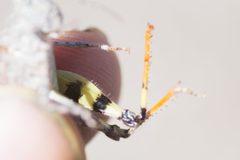
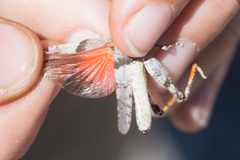
As band-winged grasshoppers ( Oedipodinae), members of Heliastus possess hindwings with distinct color patterns—typically bands or patches of contrasting color—that are concealed beneath narrow, mottled forewings when at rest. This wing-folding mechanism serves as camouflage. Specific diagnostic characters for distinguishing Heliastus from related within the tribe Hippiscini are not documented in the provided sources.
Images
Habitat
in this occupy arid and semi-arid environments. Heliastus benjamini has been observed in canyon . The of H. subroseus (rose-wing beach ) suggests coastal or sandy habitat associations. The distribution records indicate occupancy of desert washes, rangeland, and similar xeric habitats.
Distribution
Recorded from: Arizona, Colorado (United States); Mexico; Rica; Colombia; northern Chile. The spans from the southwestern United States through Central America and into western South America.
Behavior
Heliastus benjamini has been described as a "truly desert ." Like other band-winged grasshoppers, individuals likely rely on camouflage when at rest, with brightly patterned hindwings exposed only during .
Similar Taxa
- CibolacrisAlso contains small, cryptic grasshoppers of arid southwestern ; historically confused with band-winged grasshoppers but now placed in Gomphocerinae rather than Oedipodinae.
- TrimerotropisAnother of band-winged grasshoppers (Oedipodinae) with similar wing-concealment and arid-land distribution; differs in specific wing pattern and body proportions.
- LactistaSmall band-winged grasshopper with yellow-and-black hindwing pattern; Heliastus may overlap in range and with Lactista aztecus in the southwestern United States and Mexico.
More Details
Species diversity
The contains 10 described : H. aztecus, H. benjamini, H. cirrhoides, H. guanieri, H. infrequens, H. obesus, H. rubellus, H. rufipennis, H. subroseus, and H. sumichrasti.