
Lactista azteca
(Saussure, 1861)
Aztec grasshopper, Aztec range grasshopper
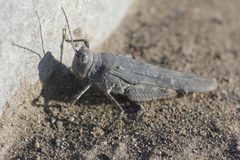
Lactista azteca is a small band-winged grasshopper in the Acrididae, commonly known as the Aztec or Aztec range grasshopper. It is characterized by yellow hindwings with a black band and a single dark bar across each forewing. The ranges from Arizona to Texas and south into Mexico, occupying desert and arid grassland .
Pronunciation
How to pronounce Lactista azteca: //lakˈtis.ta azˈte.ka//
These audio files are automatically generated. While they are not always 100% accurate, they are a good starting point.
Identification
The single dark bar across each forewing, matched by a bar on the hind , distinguishes this from similar band-winged grasshoppers. The yellow hindwings with black banding are visible in but hidden at rest. The small size (19-25 mm) and specific wing pattern separate it from the larger Pallid-winged grasshopper (Trimerotropis pallidipennis) and other sympatric Oedipodinae.
Images
Habitat
Occupies arid and semi-arid environments including desert grasslands, scrublands, and dry washes. In urban areas, has been observed in vacant lots and unpaved surfaces in Tucson, Arizona.
Distribution
Ranges from Arizona and Texas in the United States southward into Mexico.
Seasonality
Active during warmer months in desert regions; observed in spring in southern Arizona.
Behavior
is typically short-distance, with individuals settling quickly after brief aerial movement. Relies on camouflage when at rest, with concealed hindwings providing a 'vanishing act' against visual .
Similar Taxa
- Trimerotropis pallidipennisLarger (31-42 mm), with pale hindwings bearing a broad black band rather than yellow; lacks the single forewing bar characteristic of L. azteca.
- Cibolacris parvicepsSimilar in size and but lacks banded hindwings; forewings without distinct bar pattern; belongs to Gomphocerinae rather than Oedipodinae.
More Details
Taxonomic history
Originally described as Oedipoda azteca by Saussure in 1861. Some early taxonomists placed the Cibolacris in Oedipodinae, but this was later corrected; Lactista remains firmly in the band-winged grasshopper Oedipodinae.