
Melanoplus infantilis
Scudder, 1878
little spur-throat grasshopper, tiny spur-throat grasshopper
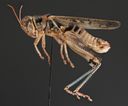
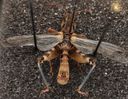
Melanoplus infantilis is a small spur-throated grasshopper in the Acrididae. The is distinguished by its diminutive size relative to other Melanoplus species. It occurs in western North America, with documented presence in Colorado. As a member of the Melanoplus, it possesses the characteristic spur on the surface of the throat that defines this species group.
Pronunciation
How to pronounce Melanoplus infantilis: //ˈmɛlənəˌplʌs ˌɪnfənˈtaɪlɪs//
These audio files are automatically generated. While they are not always 100% accurate, they are a good starting point.
Identification
The specific epithet 'infantilis' (meaning infant or childlike) refers to its notably small body size compared to . The possesses the diagnostic spur on the characteristic of the Melanoplus . Positive identification requires examination of male genitalia or comparison with .
Images
Distribution
Documented from Colorado and western North America. Distribution records indicate presence in the western United States, though precise range boundaries remain poorly documented.
Similar Taxa
- Melanoplus bivittatusMuch larger with two pale stripes along the surface; M. infantilis is substantially smaller and lacks prominent striping.
- Melanoplus differentialisLarger with distinct chevron markings on the hind ; M. infantilis is smaller and lacks such patterning.
More Details
Taxonomic Note
The was described by Samuel Hubbard Scudder in 1878. The specific epithet 'infantilis' directly references its small stature compared to related species.
Data Deficiency
Despite being described in 1878, M. infantilis remains poorly studied. The 64 iNaturalist observations suggest it is encountered infrequently or is genuinely uncommon, though identification challenges may contribute to underreporting.