
Leptysma marginicollis
(Serville, 1838)
cattail toothpick grasshopper, slender locust
Species Guides
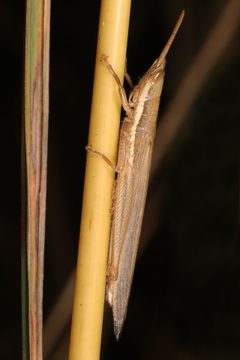
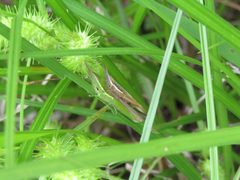
2Leptysma marginicollis is a known by the cattail toothpick grasshopper and slender locust. It is distinguished from superficially similar Gomphocerinae grasshoppers by a diagnostic spur or spine between the front legs. The species is strongly associated with wetland vegetation, particularly emergent plants such as cattails and sedges, across a broad geographic range spanning North America, the Neotropics, and the Caribbean.

Pronunciation
How to pronounce Leptysma marginicollis: //lɛpˈtɪsmə ˌmɑːrdʒɪnɪˈkɒlɪs//
These audio files are automatically generated. While they are not always 100% accurate, they are a good starting point.
Identification
Easily distinguished from Gomphocerinae grasshoppers, which it superficially resembles, by the presence of a spur or spine between the front legs. The combination of pointed , flattened sword-shaped , and elongated forewings extending well beyond the further separates it from similar .
Images
Habitat
Wet areas, typically found on emergent vegetation such as cattails (Typha) and sedges (Carex). Strongly associated with marsh and wetland .
Distribution
United States, Mexico, Neotropics, and Caribbean. Specific records from southwestern USA, Belize, Rica, Cuba, and Guatemala.
Seasonality
Mating season begins around April.
Host Associations
- Typha - cattails, emergent vegetation
- Carex - sedges, emergent vegetation
Life Cycle
are laid inside the stem of a plant, following mating that begins in April. Further details of developmental stages are not documented.
Similar Taxa
- Gomphocerinae grasshoppersSuperficially similar in having pointed and slender bodies, but distinguished by the absence of a spur between the front legs
More Details
Taxonomic history
Originally described as Opsomala marginicollis by Serville in 1838; later transferred to Leptysma.