
Opeia
McNeill, 1897
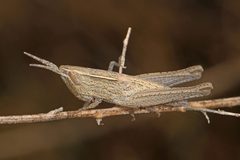
obscure grasshopper
Species Guides
2- Opeia atascosa(atascosa grasshopper)
- Opeia obscura(obscure grasshopper)
Opeia is a of slant-faced grasshoppers in the Acrididae, Gomphocerinae, tribe Eritettigini. It was described by McNeill in 1897. The genus contains at least two described : Opeia atascosa (atascosa grasshopper) and Opeia obscura (obscure grasshopper). Opeia obscura is the more widely documented species and has been recorded in surveys across western North America.
Pronunciation
How to pronounce Opeia: //oʊˈpaɪə//
These audio files are automatically generated. While they are not always 100% accurate, they are a good starting point.
Identification
Members of Opeia are classified as slant-faced grasshoppers based on the diagnostic slanted facial profile characteristic of the Gomphocerinae. The is placed in the tribe Eritettigini. Specific identification features distinguishing Opeia from other eritettigine genera such as Eritettix are not documented in the provided sources.
Images
Distribution
Records indicate presence in Arizona, California, Minnesota, Montana, and central Mexico. The appears to be distributed across western and central North America, with Opeia obscura specifically documented in Wyoming and Colorado surveys.
Similar Taxa
- EritettixBoth belong to the tribe Eritettigini within Gomphocerinae and share the slant-faced ; they may be confused in field identification.
- MermiriaAnother of slant-faced grasshoppers in Gomphocerinae with which Opeia may be confused; Mermiria such as M. bivittata are common in the same western North American .
More Details
Taxonomic placement
Catalogue of Life places Opeia in the tribe Eritettigini within Gomphocerinae, though some sources may use alternative tribal classifications.
Species diversity
Only two are formally described, but the may contain additional undescribed species given its broad geographic range.