
Ligurotettix planum
(Bruner, 1905)
Pecos Clicker Grasshopper
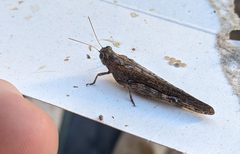
Ligurotettix planum, the Pecos Clicker , is a of slant-faced grasshopper in the Acrididae. It belongs to the Ligurotettix, which includes several species known for their acoustic territorial displays. The species occurs in arid regions of the southwestern United States and Mexico. Like other members of its genus, it is associated with creosote bush and other desert vegetation.
Pronunciation
How to pronounce Ligurotettix planum: /ˌlɪɡjʊroʊˈtɛtɪks ˈplænəm/
These audio files are automatically generated. While they are not always 100% accurate, they are a good starting point.
Identification
Ligurotettix planum is a slant-faced grasshopper ( Gomphocerinae), characterized by the distinctive slanting facial profile typical of this group. It can be distinguished from the closely related Desert Clicker (Ligurotettix coquilletti) by geographic range and subtle morphological differences; L. planum occurs further east in the Pecos River region and adjacent areas, while L. coquilletti is found in the Sonoran and Mojave Desert regions. Specific distinguishing features from require examination of male genitalia and stridulatory peg patterns.
Images
Habitat
Arid and semi-arid regions, particularly areas dominated by creosote bush (Larrea tridentata) and associated desert scrub vegetation. The occupies sandy and rocky desert flats, washes, and slopes within the Chihuahuan Desert and adjacent ecoregions.
Distribution
Recorded from Arizona, New Mexico, and Texas in the United States, extending southward into northeastern Mexico (Chihuahua, Coahuila, and adjacent states). The distribution centers on the Pecos River valley and surrounding Chihuahuan Desert regions.
Host Associations
- Larrea tridentata - primary plantCreosote bush; primary food source and territorial perch for males
Behavior
Males produce repetitive acoustic territorial displays (stridulations) by rubbing a row of stridulatory pegs on the inside of the hind against the forewing. Males are highly sedentary and defend individual creosote bushes as territories. Territorial defense involves a sequence of stridulation, chasing, and physical combat with intruding males. Females are attracted to male songs but do not stridulate.
Ecological Role
Herbivore in desert scrub ; contributes to nutrient cycling through consumption of creosote bush foliage. Serves as prey for birds, reptiles, and . Male territoriality and acoustic signaling may influence plant structure through localized grazing pressure.
Similar Taxa
- Ligurotettix coquillettiVery similar congeneric ; distinguished by geographic separation (L. coquilletti in Sonoran/Mojave Deserts, L. planum in Chihuahuan Desert/ Pecos region) and subtle morphological differences in male genitalia
- Other GomphocerinaeShare slant-faced ; distinguished by stridulatory apparatus structure, specificity to creosote bush, and acoustic pattern
More Details
Acoustic behavior
The 'clicker' refers to the distinctive tsick-tsick sound produced by males. This sound has a ventriloquistic quality that makes locating individual males difficult.
Genus relationships
Ligurotettix is classified in tribe Cibolacrini within Gomphocerinae. The includes multiple adapted to creosote bush across the southwestern United States and Mexico.