
Neoneura
Selys, 1860
Robust Threadtails
Species Guides
2- Neoneura aaroni(Coral-fronted Threadtail)
- Neoneura amelia(Amelia's Threadtail)
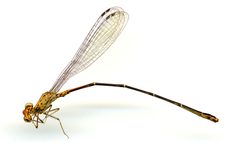
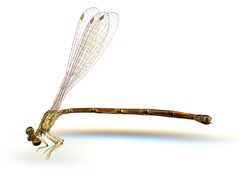
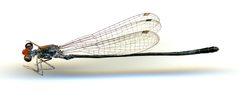
Neoneura is a of in the Protoneuridae, commonly called Robust Threadtails. The genus comprises approximately 30 distributed throughout the Neotropics from Cuba and Texas to Argentina. Unlike other threadtails, Neoneura species have no more slender than pond damselflies. Males display bright coloration in red, orange, yellow, and blue, while females are more subdued. The genus exhibits distinctive reproductive including tandem oviposition with post-copulatory guarding.
Pronunciation
How to pronounce Neoneura: /ˌniːəˈnʊərə/
These audio files are automatically generated. While they are not always 100% accurate, they are a good starting point.
Identification
Distinguished from Protoneura (protoneurans) by not more slender than pond damselflies; females have relatively short, straight abdomens that are not bent during oviposition. Distinguished from pond damselflies (Coenagrionidae) by -level characteristics and Neotropical distribution. Males identified by bright red, orange, yellow, or blue coloration.
Images
Habitat
Found at edges of lakes and quiet waters. Observed in preserved areas including forested systems. Specific microhabitat details limited; requires verification for -level generalization.
Distribution
Neotropical distribution: Cuba, Texas (USA) south through Central America and South America to Argentina. Documented in Brazil (Pernambuco state), Colombia.
Life Cycle
stage laid among floating wood chippings or on emergent plant stems. Larval stage details not documented. stage active at water edges.
Behavior
Pairs form tandem position (male holding female by pronotum) during oviposition. Male remains in tandem with female during -laying. Post-copulatory guarding observed in all studied couples. Males exhibit territorial defense with aggressive contacts between resident and intruder males. Intruder males attempt to interrupt oviposition. Sperm dimorphism present: two distinct sperm produced, potentially functioning in sperm competition.
Similar Taxa
- ProtoneuraProtoneurans have more slender than pond damselflies, and females bend their abdomens when laying —traits not seen in Neoneura.
- Coenagrionidae (pond damselflies)Neoneura has similar width but differs in characteristics, Neotropical distribution, and reproductive including tandem oviposition with post-copulatory guarding.
More Details
Family Classification Discrepancy
Sources vary in placement: Wikipedia and iNaturalist list Protoneuridae; GBIF and NCBI list Coenagrionidae. Catalogue of Life places Neoneura in Protoneuridae within superfamily Coenagrionoidea. Protoneuridae is the currently accepted family in odonate literature.
Sperm Dimorphism
N. sylvatica exhibits the first recorded case of sperm dimorphism in Odonata: 1 (99μm, undifferentiated , spiral body) and morphotype 2 (118μm, differentiated head 31μm, 86μm with hook-shaped head and ripples). This may enhance sperm competition, with anucleated sperm potentially blocking rival sperm and nucleated sperm for . Whether this trait is -wide remains unknown.
Reproductive Behavior Study Limitations
Behavioral observations for N. sylvatica based on limited (5 labelled individuals, 5 males collected). Broader -level generalizations for Neoneura require additional study.