
Palaemnema
Selys, 1860
shadowdamsels
Species Guides
1- Palaemnema domina(Desert Shadowdamsel)
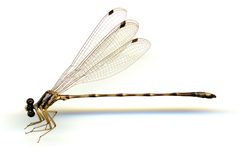
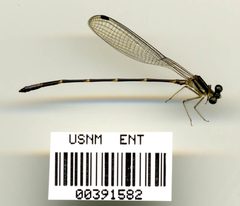
Palaemnema is a of damselflies in the Platystictidae, commonly known as shadowdamsels. They inhabit the New World tropics and subtropics, ranging from Arizona south to Peru and French Guiana. These insects are adapted to life in deeply shaded forest environments, particularly near small streams.
Pronunciation
How to pronounce Palaemnema: //ˌpæliˈnɛmə//
These audio files are automatically generated. While they are not always 100% accurate, they are a good starting point.
Identification
The combination of large prothorax, long legs, and male forceps-shaped distinguishes Palaemnema from similar . The blue-and-black or all-black coloration pattern, combined with preference for dense shade near small forest streams, aids field identification. The genus can be separated from other Platystictidae by the distinctive male cercus shape.
Images
Appearance
Medium-sized damselflies, generally comparable in size to large pond damselflies. Most have predominantly black bodies with blue markings, typically on the and as a blue tip on the ; some species are entirely black. The prothorax is notably large and the legs are long. Males possess forceps-shaped (paired appendages at the abdominal tip).
Habitat
Dense shade near small streamlets that trickle through tropical forests. Requires permanently moist, deeply shaded microhabitats with minimal direct sunlight.
Distribution
New World distribution from Arizona (United States) south through Mexico and Central America to Peru and French Guiana in South America.
Similar Taxa
- Other Platystictidae generaSimilar -level but lack the distinctive forceps-shaped male and large prothorax characteristic of Palaemnema
- Large pond damselflies (Coenagrionidae)Similar size but differ in preference (open water vs. dense forest shade), color pattern, and lack forceps-shaped male
More Details
Taxonomic note
Wikipedia incorrectly describes Palaemnema as a of ; it is correctly classified as damselflies (suborder Zygoptera), as confirmed by Catalogue of Life and NCBI .