
Palaemnema domina
Calvert, 1903
Desert Shadowdamsel
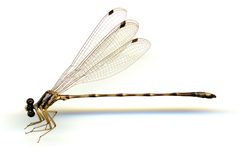
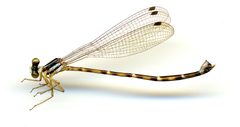
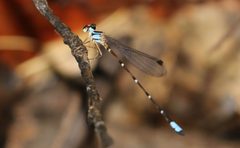
Palaemnema domina, commonly known as the desert shadowdamsel, is a in the Platystictidae. range from 35 to 44 mm in length with a wingspan of 38 to 48 mm. The species exhibits in coloration, with males showing brighter blue markings on abdominal segments 8 and 9 compared to females. It is active from July to September in riparian .
Pronunciation
How to pronounce Palaemnema domina: //pəˌlaɪmˈniːmə doʊˈmaɪnə//
These audio files are automatically generated. While they are not always 100% accurate, they are a good starting point.
Identification
The combination of bicolored (dark brown above, dull yellow below), blue with black horizontal stripes including a broad stripe, and the specific pattern of blue and black on abdominal segments distinguishes this from other shadowdamsels. The enlarged blue segment 9 in females and blue segments 8–9 in males are key diagnostic features. Found in dense riparian vegetation rather than open water typical of many other .
Images
Habitat
Dense undergrowth alongside small, rocky streams in forested areas. congregate in dense vegetation and tangled roots of fallen sycamores and cottonwoods within a few feet of the ground and near streams during hot periods.
Distribution
Southeastern Arizona, Mexico, and Central America south to Nicaragua.
Seasonality
on the wing from July to September.
Life Cycle
Larvae live on gravelly beds of fast-flowing streams. Large nymphs climb onto mid-stream rocks to emerge at the end of the dry season. Females oviposit into stems of aquatic plants while males perch nearby.
Behavior
During heat of day, congregate in dense low vegetation near streams and perch with dangling, making them easily captured by hand. In morning, evening, and cool or rainy conditions, adults become active and frequently move in tandem pairs. Males appear to guard females during oviposition by perching nearby and presumably deterring other males.
Ecological Role
Aquatic as larvae, feeding on stream benthos. Terrestrial predator as , likely feeding on small flying insects.
Human Relevance
Subject of odonatological interest due to restricted range and specific requirements. No known economic importance.
Similar Taxa
- Other Palaemnema speciesShare general shadowdamsel and forest stream , but differ in specific abdominal color patterns and details of thoracic striping
- Other Platystictidae members share slender build and forest-associated habits, but P. domina distinguished by its specific color pattern and desert/riparian distribution
More Details
Activity patterns
Strongly influenced by temperature and time of day; activity shifts from sedentary perching during midday heat to active movement during cooler periods
Sources and further reading
- BugGuide
- Wikipedia
- GBIF taxonomy match
- iNaturalist taxon
- NCBI Taxonomy
- Catalogue of Life
- Spotlighting Bumble Bee Research in the Neal Williams' Lab | Bug Squad
- Texas Entomologists Find Redbanded Stink Bug to Be Dominant Species on Soybean
- Feeding strategies in competing hummingbirds | Blog
- Invasive species as biomonitors of microplastics?
- feeding strategy | Blog
- Founding mothers - Polistes dominulus — Bug of the Week