
Hesperagrion heterodoxum
(Selys, 1868)
Painted Damsel
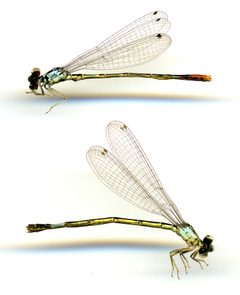
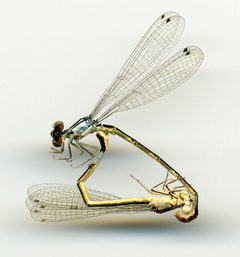
Hesperagrion heterodoxum, commonly known as the Painted Damsel, is a small in the Coenagrionidae. Males are notably colorful, with spectacular coloration that distinguishes them from other damselflies in their range. The occurs in western North America and Middle America, where it inhabits streams and rivers with emergent vegetation. It has been observed in association with warm springs and vegetated waterways.
Pronunciation
How to pronounce Hesperagrion heterodoxum: //ˌhɛs.pər.əˈɡriː.ɒn ˌhɛt.ə.roʊˈdɒk.səm//
These audio files are automatically generated. While they are not always 100% accurate, they are a good starting point.
Identification
Males are readily identified by their spectacular coloration, which stands out among other in mixed . The can be distinguished from the sympatric Mexican Forktail (Ischnura demorsa), with which it often occurs, by its larger size and more vivid color pattern. Specific diagnostic characters for separating it from other Hesperagrion species require examination of appendage .
Images
Habitat
Warm springs and streams with emergent vegetation; has been observed in narrow spring-fed channels with abundant aquatic vegetation and in shallow river courses with overhanging vegetation.
Distribution
Western North America and Middle America; recorded from New Mexico (USA) and presumably ranges more broadly in the southwestern United States and Mexico.
Behavior
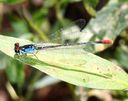
forage in and around emergent vegetation along streams and springs. Males have been observed perching on vegetation overhanging water.
Similar Taxa
- Ischnura demorsaMexican Forktail occurs sympatrically and in similar ; Painted Damsel is larger and more vividly colored, allowing visual separation in the field