
Enallagma semicirculare
Selys, 1876
Claw-tipped Bluet
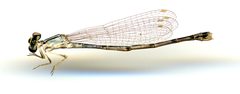
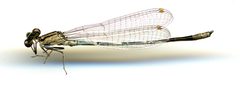
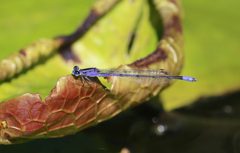
Enallagma semicirculare, commonly known as the claw-tipped bluet, is a in the Coenagrionidae. It occurs primarily in Mexico and the southwestern United States, with documented records from Arizona, New Mexico, and southern Texas. The species was described by Edmond de Sélys Longchamps in 1876. Like other members of the Enallagma, it is a small, slender damselfly associated with freshwater .
Pronunciation
How to pronounce Enallagma semicirculare: //ɛˈnæləmə sɛˌmɪsɝˈkjulɛri//
These audio files are automatically generated. While they are not always 100% accurate, they are a good starting point.
Identification
The specific epithet "semicirculare" and "claw-tipped bluet" suggest distinctive features of the male appendages, though detailed diagnostic characters are not documented in available sources. As with other Enallagma , identification typically requires examination of male terminal appendages and female mesostigmal plates. Comparison with sympatric bluets in the southwestern United States and Mexico would be necessary for accurate field identification.
Images
Distribution
Mexico; southwestern United States (Arizona, New Mexico); southern Texas. GBIF records indicate presence in Oaxaca, Mexico.
Similar Taxa
- Enallagma civile (Familiar Bluet)Overlaps in range in southern Texas; both are small blue in the Enallagma requiring careful examination of appendages for separation.
- Other Enallagma species in the southwestern United StatesMultiple occur in the region; male terminal appendage structure is the primary distinguishing feature among .
More Details
Taxonomic History
The was described by Edmond de Sélys Longchamps in 1876, a prominent Belgian entomologist who described numerous Odonata species. Rosser Garrison published a taxonomic revision of the Enallagma in 1984, which included this species.
Data Availability
Detailed biological information for this appears limited in published literature. Most available information is derived from distributional records and taxonomic databases rather than ecological or behavioral studies.
Sources and further reading
- BugGuide
- Wikipedia
- GBIF taxonomy match
- iNaturalist taxon
- Catalogue of Life
- Dragonfly Enthusiasts, Unite! Open House Set Nov. 6 at Bohart Museum | Bug Squad
- Know Your Dragonflies! | Bug Squad
- Dragonflies! Who Isn't Fascinated by Dragonflies? | Bug Squad
- Bohart Museum Open House: Dragonflies Rule! | Bug Squad
- Hooray for the red, white, and blue! Milkweed longhorned beetle, Tetraopes tetraophthalmus; dogbane tiger moth, Cycnia tenera; and familiar bluet, Enallagma civile — Bug of the Week
- Rising Temperatures Could Stunt Growth, Threaten Survival of Common Damselfly