
Coenagrion interrogatum
(Selys, 1876)
Subarctic Bluet
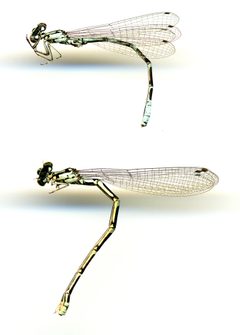
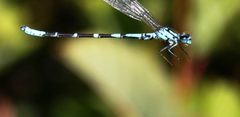
Coenagrion interrogatum, commonly known as the Subarctic Bluet, is a small in the Coenagrionidae. First described by Edmond de Sélys Longchamps in 1876, this holds the northernmost distribution of any Eurasian bluet. The larva was formally described in 1980, with documentation of its preferences and period in the Yukon.
Pronunciation
How to pronounce Coenagrion interrogatum: //ˌsiː.nəˈɡraɪ.ɒn ɪnˌtɛr.əˈɡeɪ.təm//
These audio files are automatically generated. While they are not always 100% accurate, they are a good starting point.
Identification
Distinguished from other Coenagrion by its extreme northern distribution; identification to species level requires examination of morphological details, particularly of male terminal appendages and female ovipositor.
Images
Habitat
Pond and wetland in subarctic and regions. Larvae occupy freshwater aquatic environments.
Distribution
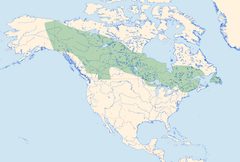
The most northerly ranging Eurasian bluet, with records from Alaska, Yukon, Northwest Territories, throughout most of Canada east to Newfoundland, and in northern New England states and some northerly eastern U.S. states.
Seasonality
period documented in the Yukon, though specific months not detailed in available sources.
Life Cycle
Aquatic larval stage (naiad) in freshwater ; terrestrial stage. and nymph development occurs in water.
Similar Taxa
- Coenagrion resolutumOverlapping northern distribution; requires careful morphological examination to distinguish.
- Other Coenagrion bluetsSimilar blue and black coloration; geographic range is primary distinguishing feature for C. interrogatum.
More Details
Taxonomic history
Originally described as Agrion interrogatum by Hagen in 1876, later transferred to Coenagrion. The larva remained undescribed until 1980.
Research significance
The 1980 description of the larva provided the first formal documentation of , aiding identification of nymphs in subarctic aquatic surveys.
Sources and further reading
- BugGuide
- Wikipedia
- GBIF taxonomy match
- iNaturalist taxon
- NCBI Taxonomy
- Catalogue of Life
- The Day That Bugs Ruled | Bug Squad
- A Damsel, But Not in Distress | Bug Squad
- Quick! Find the Damselfly! | Bug Squad
- Blue as Blue Can Be | Bug Squad
- Bug Eric: Another Odonata Record
- Rising Temperatures Could Stunt Growth, Threaten Survival of Common Damselfly
- THE LARVA OF COENAGRION INTERROGATUM (ODONATA: COENAGRIONIDAE), WITH NOTES ON THE SPECIES IN THE YUKON