
Argia apicalis
(Say, 1840)
Blue-fronted Dancer
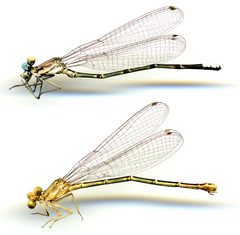
Argia apicalis, commonly known as the Blue-fronted Dancer, is a of in the Coenagrionidae native to North America. First described by Thomas Say in 1840, it is a common and widespread species assessed as Least Concern by the IUCN. The species exhibits notable color , with males occurring in bright blue and gray-black phases and females in brown, turquoise, and gray-black phases. Color changes are multi-directional and not tied to age or mating status. Males use thoracic color patterns for sex recognition, with brown females eliciting the strongest sexual response. The species shows distinctive geographical variation in thoracic stripe patterns, with broad-striped forms in the southeastern United States and typical forms elsewhere.
Pronunciation
How to pronounce Argia apicalis: /ˈaɹdʒiə ˌæpɪˈkeɪlɪs/
These audio files are automatically generated. While they are not always 100% accurate, they are a good starting point.
Identification
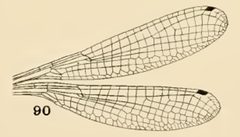
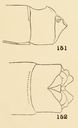
Males distinguished by blue-tipped , though this feature aids but is not indispensable for sex recognition. Two major geographical variants: broad-striped form with wide, full-length humeral stripe and well-developed thoracic stripe in females, versus typical form with reduced pattern. Southeastern show larger black areas on dorsum of and on male eighth and ninth abdominal segments. in coloration: males bright blue or gray-black, females brown, turquoise, or gray-black.
Images
Habitat
River systems; primarily associated with running water . In southeastern portion of range, colonies are restricted to river systems with notable absence from lakes, ponds, smaller streams, and river headwaters.
Distribution
North America including Middle America; widespread across eastern and central United States. Southeastern margin of distribution characterized by isolated broad-striped groups in southeast Georgia and northern Florida. Typical form occurs west and north of this region. One known intergradation zone between typical and broad-striped populations.
Seasonality
Summer with of diverse age structure; maximum activity near noon.
Behavior
Males occur in two color phases (bright blue, gray-black), females in three (brown, turquoise, gray-black). Color change is multi-directional with up to eight transitions in 12 days; dark phase is more temporary. No color phase correlates with age or mating status. Males arrive at water earlier than females and space themselves at approximately six-foot intervals, maintaining these areas through aggressive non-sexual activity that wards off 87% of intruders. Males recognize sex and seize females immediately upon arrival without courtship or display. Males discriminate intact females from males using thoracic color, responding more sexually to brown females than other colors. Copulation lasts approximately 16 minutes and occurs away from male concentration areas. Oviposition is gregarious at communal sites including willow roots, boards, sticks, and horizontal Helenium. Oviposition consists of three phases: exploration (25 min), tandem oviposition (65 min), and solitary oviposition (21 min). Females avoid second matings on same day through rapid escape .
Similar Taxa
- Argia moestaSimilar and preferences; Powdered Dancer shows mature males that could be confused with gray-black phase of A. apicalis
- Other Argia species Argia is speciose with many similar-sized blue ; A. apicalis distinguished by specific thoracic stripe patterns and blue-tipped
Sources and further reading
- BugGuide
- GBIF taxonomy match
- iNaturalist taxon
- NCBI Taxonomy
- Catalogue of Life
- Dragonfly Enthusiasts, Unite! Open House Set Nov. 6 at Bohart Museum | Bug Squad
- Bohart Museum Open House: Dragonflies Rule! | Bug Squad
- Meloidae Holdings | Entomology Research Museum
- Encyrtid Holdings | Entomology Research Museum
- Bug Eric: New Mexico Dragonfly Blitz - Day 3
- Bizarre, beautiful extremes | Beetles In The Bush
- Demography and Behavior of the Damselfly, Argia Apicalis (Say), (Odonata: Coenagriidae)
- AN ANALYSIS OF GEOGRAPHICAL VARIATION IN THE DAMSELFLY, ARGIA APICALIS (ZYGOPTERA: COENAGRIONIDAE)
- Color Variation and Significance of Color in Reproduction in the Damselfly, Argia apicalis (Say) (Zygoptera: Coenagriidae)