
Pseudoleon
Kirby, 1889
Species Guides
1- Pseudoleon superbus(Filigree Skimmer)
Pseudoleon is a of in the Libellulidae, containing only Pseudoleon superbus, commonly known as the filigree skimmer. This subtropical is notable for its distinctive wing patterning and cryptic coloration. It has been documented from Rica northward through Mexico to the southwestern United States, with recent range extensions into Colorado representing significant northern expansion. The genus was established by Kirby in 1889.
Pronunciation
How to pronounce Pseudoleon: //ˌsjuː.doʊˈliː.ən//
These audio files are automatically generated. While they are not always 100% accurate, they are a good starting point.
Identification
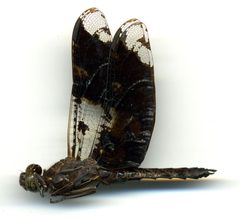
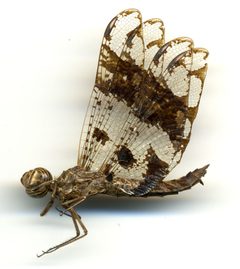
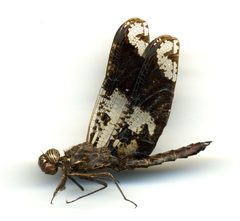
The single in this , Pseudoleon superbus, can be distinguished from other Libellulidae by its heavily mottled, reticulated wing pattern. Males have mostly blackish wings, particularly the hindwings, while females display an abstract, reticulated pattern with less black. Both sexes exhibit vertical "pinstripes" on the . Body length ranges 38–45 mm, with hindwing length averaging 30–35 mm. The combination of cryptic body coloration and complex wing markings separates it from superficially similar skimmers such as Common Whitetail (Plathemis lydia).
Images
Habitat
Rocky streams or rivers with slow to moderate current in open settings. Observations indicate preference for riparian corridors through arid or semi-arid landscapes, including narrow, high-walled canyons and canyon-bottom ponds. typically contain algal mats and detritus accumulations used for oviposition. Elevation records range from approximately 6,000 ft to 7,500 ft.
Distribution
Primary range includes southern and central Arizona, New Mexico, western and central Texas, and Mexico, extending south to Rica. Significant northern range extension documented in Colorado (Colorado Springs area, 2014, with subsequent breeding confirmation in 2016).
Seasonality
activity observed in July in Colorado; likely active during warmer months throughout range. Specific across full range is not well documented.
Life Cycle
Females oviposit by hovering over water and repeatedly dipping the tip into algal mats or detritus, depositing at least one per thrust. stages (nymphs) presumably aquatic, though specific details of larval development are not documented in available sources.
Behavior
Males are territorial, chasing other males and pursuing females over considerable distances. When overheated, individuals assume an "obelisking" posture—perching with raised vertically to minimize sun exposure. Males patrol watercourses and perch on exposed rocks between foraging .
Ecological Role
are aerial . Nymphs presumably function as aquatic predators in rocky stream . Specific ecological impacts or interactions have not been documented.
Human Relevance
Subject of interest to odonate enthusiasts and citizen scientists due to rarity and range expansion. Colorado records represent state-first documentation and have been submitted to Odonata Central for verification. Not known to be of economic or medical importance.
Similar Taxa
- Plathemis lydiaCommon Whitetail has similar perching and use, but lacks the reticulated wing pattern and pinstripes of Pseudoleon superbus; males have prominent black wing bands rather than extensive blackish coloration
- Libellula saturataFlame Skimmer occurs sympatrically in some areas and shares Libellulidae, but has bright orange-red body coloration and unpatterned or differently patterned wings without the filigree-like reticulation
More Details
Taxonomic status
Pseudoleon is a ; Pseudoleon superbus is the sole . The genus has been stable in Libellulidae since its description by Kirby in 1889.
Range dynamics
The 2014 Colorado record represented approximately 500 km north of the previously known range. Subsequent confirmation of breeding in 2016 suggests established expansion rather than vagrant occurrence. modification (reduced water levels following pipeline installation) has not negatively impacted the local population.