
Erythrodiplax umbrata
(Linnaeus, 1758)
band-winged dragonlet
Erythrodiplax umbrata, the band-winged dragonlet, is a small in the Libellulidae. It has an exceptionally broad geographic range spanning the Caribbean, Central America, North America, and South America. The species is listed as Least Concern by the IUCN with a stable . It is one of many species in the diverse Erythrodiplax , which contains dragonflies with varied ecological specializations including some adapted to saline .
Pronunciation
How to pronounce Erythrodiplax umbrata: /eˌrɪθroʊˈdɪplæks ʌmˈbreɪtə/
These audio files are automatically generated. While they are not always 100% accurate, they are a good starting point.
Identification
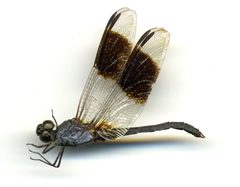
Distinguished from other small libellulids by the combination of banded wing pattern (dark tips and marginal bands), small size, and male . Similar in the Erythrodiplax can be separated by wing pattern details and male coloration; E. berenice (seaside dragonlet) lacks the distinct wing banding and is restricted to saline coastal . E. funerea has different wing markings. Examination of male secondary genitalia may be required for definitive identification in some cases.
Images
Appearance
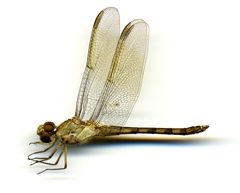
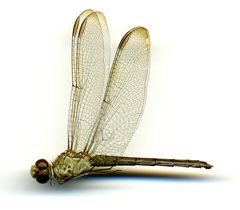
Small with banded wings featuring dark brown or blackish markings at the wing tips and along the outer margins, creating a characteristic banded pattern. Body coloration varies; males typically develop (powdery blue or whitish) coloration on the with maturity, while females and individuals tend toward yellowish or greenish tones. The is relatively slender compared to larger skimmers. Wing venation follows the typical libellulid pattern with a well-defined nodus and pterostigma.
Habitat
Occupies a wide range of freshwater including ponds, lakes, slow-moving streams, marshes, and ditches. Shows adaptability to both natural and anthropogenic water bodies. Found from sea level to moderate elevations across its extensive range. Unlike some , not specialized for saline environments.
Distribution
Widespread across the Neotropical and Nearctic regions: Caribbean islands, Central America from Mexico to Panama, South America including Brazil (widespread across multiple states), Colombia, Venezuela, and other northern South American countries, and extending into southern North America including the southern United States (Texas, Florida, and Gulf Coast region).
Seasonality
Active year-round in tropical portions of its range; in temperate areas, active primarily during warmer months (spring through fall) with emerging in late spring and persisting until first frosts.
Ecological Role
Human Relevance
Occasional subject of observation by enthusiasts and photographers due to its widespread distribution and distinctive wing pattern. No significant economic importance; not a pest . Like other dragonflies, contributes to mosquito control through on aquatic larvae and forms.
Similar Taxa
- Erythrodiplax bereniceSimilar small size and , but lacks banded wing pattern and is exclusively associated with saline coastal ; behaviorally more lethargic with less territorial defense
- Erythrodiplax funereaOverlapping range and similar use, but differs in wing marking pattern and male coloration details
More Details
Conservation status
IUCN Red List status: Least Concern (), assessed 2017. stable with no immediate threats identified. Broad distribution and flexibility contribute to secure status.
Taxonomic note
One of approximately 50+ in the Erythrodiplax, a diverse group of small to medium skimmers primarily distributed in the Americas. The genus includes notable ecological such as E. berenice, the only odonate known to complete development in saline water.
Sources and further reading
- BugGuide
- Wikipedia
- GBIF taxonomy match
- iNaturalist taxon
- NCBI Taxonomy
- Catalogue of Life
- Dragonfly meets spider, spider eats dragonfly: Seaside Dragonlet, Erythrodiplax Berenice, and daddy-long-legs, Pholcus spp. — Bug of the Week
- Erythrodiplax ana Archives - Entomology Today
- Bug Eric: R.I.P. LRGV?
- erythrodiplax-ana - Entomology Today
- Archive — Bug of the Week
- A New Dragonfly Species Discovered in Brazil