
Erythemis vesiculosa
(Fabricius, 1775)
Great Pondhawk
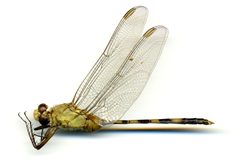
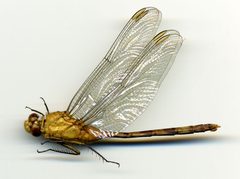
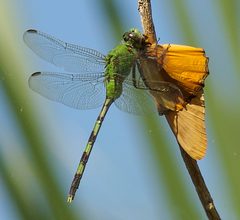
Erythemis vesiculosa, commonly known as the great pondhawk, is a in the Libellulidae. It is distributed throughout the Americas, ranging from the southern United States through Central and South America. The has been documented in insular , including the Galápagos Islands, where it exhibits behavioral adaptations to species-poor .
Pronunciation
How to pronounce Erythemis vesiculosa: /ɛˈrɪθɛmɪs vɛˌsɪkjʊˈloʊsə/
These audio files are automatically generated. While they are not always 100% accurate, they are a good starting point.
Images
Distribution
Widely distributed throughout the Americas, from the southern United States southward through Central and South America. Documented in Brazil (including states Amazonas, Amapá, Bahia, Distrito Federal, Espírito Santo, Goiás, Maranhão, Minas Gerais, Mato Grosso, Pará, Pernambuco, Paraná, Rio de Janeiro, Rio Grande do Norte, Roraima, Rio Grande do Sul, Santa Catarina, São Paulo), Colombia, Mexico (Oaxaca), and the Caribbean. Also present on the Galápagos Islands (Isabela Island).
Behavior
In insular , females have been observed to be more efficient at oviposition when alone compared to oviposition under male non-contact guarding. This behavioral pattern has been attributed to sexual conflict between males and females. The exhibits at least two distinct oviposition strategies in island pond .
Similar Taxa
- Erythemis simplicicollisBoth are pondhawk in the Erythemis, sharing similar preferences and general body plan; E. simplicicollis (eastern pondhawk) is a North American with overlapping range in the southern United States
- Erythemis collocataCongeneric pondhawk with similar and ; the western pondhawk occurs in western North America with potential range overlap in some regions
More Details
Behavioral Research Context
Studies of E. vesiculosa in the Galápagos have contributed to understanding how odonate in -poor insular environments exhibit high behavioral diversity in oviposition strategies. This research suggests that behavioral may expand when fewer competing species are present.
Sources and further reading
- BugGuide
- Wikipedia
- GBIF taxonomy match
- iNaturalist taxon
- NCBI Taxonomy
- Catalogue of Life
- Lovin' the Lavender | Bug Squad
- An Introduction to Dragonflies and Spiders | Bug Squad
- Behavioural diversity of an insular population of Tramea darwini, with notes on Brachymesia herbida and Erythemis vesiculosa (Odonata, Libellulidae)