
Erythemis collocata
(Hagen, 1861)
Western pondhawk
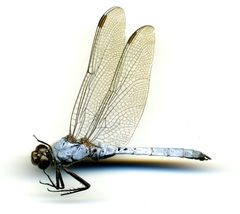
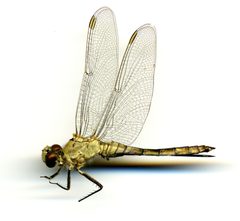
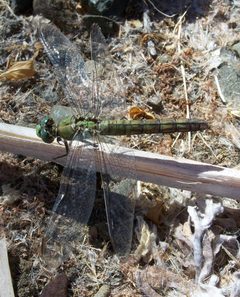
Erythemis collocata, the western pondhawk, is a in the Libellulidae native to western North America. are predatory, specializing in capturing flying insects. The has been documented feeding on the western malaria mosquito (Anopheles freeborni), particularly at dusk when these mosquitoes form mating swarms. It employs both active pursuit and sit-and-wait hunting strategies.
Pronunciation
How to pronounce Erythemis collocata: /ɛˈrɪθɪmɪs kəˈloʊkətə/
These audio files are automatically generated. While they are not always 100% accurate, they are a good starting point.
Images
Habitat
Observed in agricultural settings including lavender fields, suggesting use of open, flowering vegetation. As a member of Libellulidae, likely associated with freshwater for larval development, though specific breeding sites are not documented in sources.
Distribution
Western Canada, western United States, and Mexico. GBIF records confirm presence in Middle America and North America.
Seasonality
Active during summer months; observed in northern California in late June.
Diet
Predatory on flying insects. Documented to feed on Anopheles freeborni (western malaria mosquito), attacking primarily at dusk when mosquitoes aggregate into mating swarms. Attack frequency decreases as light levels drop, indicating reliance on visual stimuli for prey detection.
Behavior
Employs both active pursuit and sit-and-wait (ambush) predatory strategies. Attacks prey using visual detection, with hunting declining in low-light conditions.
Ecological Role
of mosquitoes, including Anopheles freeborni, a for .
Human Relevance
May contribute to of mosquito , including . Observed in agricultural tourism settings (lavender farms), indicating of human-modified landscapes.
Similar Taxa
- Erythemis simplicicollisEastern pondhawk; similar and but occurs in eastern North America rather than western range of E. collocata.
- Sympetrum corruptumVariegated meadowhawk; co-occurs in similar (observed together in lavender fields) but distinguished by different wing patterning and body coloration.