
Dythemis nigrescens
Calvert, 1899
Black Setwing
Dythemis nigrescens, commonly known as the black setwing, is a in the Libellulidae. It occurs across Central America and North America, with documented observations concentrated in the southwestern United States and Mexico. The species holds a least concern conservation status with stable . The refers to its dark wing coloration, a distinctive feature among setwings in the Dythemis.
Pronunciation
How to pronounce Dythemis nigrescens: //daɪˈθɛmɪs nɪˈɡrɛsɛnz//
These audio files are automatically generated. While they are not always 100% accurate, they are a good starting point.
Identification
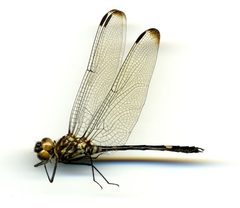
Distinguished from other Dythemis primarily by its darkly pigmented wings. Dythemis velox, the most similar sympatric , has clear wings with dark venation rather than uniformly dark wings. The dark wing coloration is visible in and at rest. Examination of wing venation and abdominal patterning may aid identification where ranges overlap.
Images
Appearance
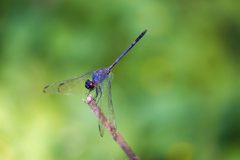
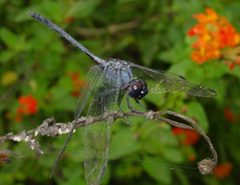
Medium-sized with predominantly dark, often blackish wings that give the its . Body coloration typically dark. Wings may show some translucency at bases but are notably darker than most sympatric skimmer species. The dark wing pigmentation distinguishes it from like Dythemis velox, which has clear wings.
Habitat
Associated with riparian zones and water bodies in arid and semi-arid regions. Frequently observed near streams, rivers, and ponds in desert and thorn-scrub environments. The shows affinity for water sources in otherwise dry landscapes.
Distribution
Ranges from the southwestern United States (Arizona, New Mexico, Texas, southern California) south through Mexico into Central America. Records from Oaxaca confirm Mexican distribution. The is resident throughout its range rather than migratory.
Seasonality
active during warmer months; period extends from spring through fall in most of range, with peak activity in summer. Activity patterns correspond to monsoon-influenced precipitation cycles in desert regions.
Behavior
Ecological Role
function as aerial of small flying insects. Larvae are aquatic predators in benthic . Serves as prey for birds, fish, and other . Contributes to nutrient cycling between aquatic and terrestrial through .
Human Relevance
Subject of citizen science documentation through platforms like iNaturalist, with over 4,400 observations contributing to distribution knowledge. No significant economic or medical importance. Appreciated by enthusiasts and photographers for its distinctive dark wings.
Similar Taxa
- Dythemis veloxSympatric with clear wings and dark venation rather than uniformly dark wings; similar body size and perching but readily distinguished by wing coloration
More Details
Conservation Status
IUCN Red List category (Least Concern) as of 2017 review, with stable trend and no identified immediate threats
Etymology
Specific epithet 'nigrescens' refers to the blackening or darkening wing coloration; 'black setwing' directly describes this diagnostic feature
Sources and further reading
- BugGuide
- Wikipedia
- GBIF taxonomy match
- iNaturalist taxon
- Catalogue of Life
- Encyrtid Holdings | Entomology Research Museum
- Bug Eric: R.I.P. LRGV?
- Alydidae | Beetles In The Bush
- Nomenclatural changes in Phymatodes | Beetles In The Bush
- Working with Cerceris fumipennis—Epilogue | Beetles In The Bush
- Bug Eric: Flying Ants