
Erpetogomphus elaps
Selys, 1858
Straight-tipped Ringtail
Erpetogomphus elaps, commonly known as the straight-tipped ringtail, is a of clubtail in the Gomphidae. The species was described by Selys in 1858. It is known from Central America and holds a least concern conservation status from the IUCN, with a stable and no immediate threats to its survival.
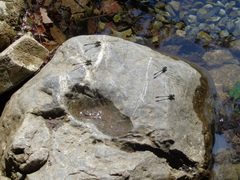
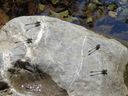
Pronunciation
How to pronounce Erpetogomphus elaps: /ɛrˌpɛtoʊˈɡɒmfəs ˈɛlæps/
These audio files are automatically generated. While they are not always 100% accurate, they are a good starting point.
Identification
Members of the Erpetogomphus, known as ringtails, are characterized by ringed and typically perch with their abdomen curled upward, a trait that helps distinguish them from other gomphid genera. Specific diagnostic features for E. elaps are not documented in available sources. The may be distinguished from such as E. heterodon (dashed ringtail) and E. compositus (white-belted ringtail) by thoracic patterning and abdominal markings, though precise comparative details for E. elaps are not established in the provided materials.
Images
Habitat
As a member of Gomphidae, the is associated with lotic (flowing water) . Related Erpetogomphus species have been observed along rivers and streams, often perching on vegetation overhanging or within the water channel.
Distribution
Central America. GBIF records indicate presence in Middle America.
Behavior
of the Erpetogomphus are known to perch with the curled upward, a distinctive behavioral trait among gomphid .
Similar Taxa
- Erpetogomphus heterodonBoth are ringtail clubtails in the same , but E. heterodon has a solid green with relatively few brown stripes, distinguishing it from other ringtail .
- Erpetogomphus compositusBoth are ringtail clubtails, but E. compositus has a heavily striped with a distinctive white central stripe on the side of the thorax, rather than yellow-green adjacent patches.
More Details
Taxonomic Authority
The was first described by Edmond de Sélys Longchamps in 1858, a prominent Belgian entomologist who described numerous Odonata species.
Conservation Assessment
IUCN Red List status is Least Concern () with stable trend. No immediate threats to the ' survival have been identified.
Sources and further reading
- BugGuide
- Wikipedia
- GBIF taxonomy match
- iNaturalist taxon
- Catalogue of Life
- Dragonfly Enthusiasts, Unite! Open House Set Nov. 6 at Bohart Museum | Bug Squad
- Don't Miss This: Maggot Art at the Bohart | Bug Squad
- Bohart Museum Open House: Dragonflies Rule! | Bug Squad
- Bug Eric: New Mexico Dragonfly Blitz - Day 3
- First-ever BitB “Reader’s Poll” | Beetles In The Bush
- Bug Eric: New Mexico Dragonfly Blitz - Day 2