
Somatochlora septentrionalis
(Hagen, 1861)
Muskeg Emerald
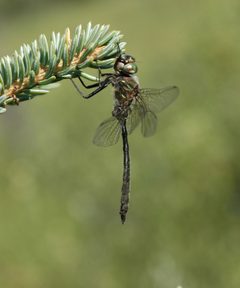
Somatochlora septentrionalis, known as the muskeg emerald, is a in the Corduliidae to Canada. are medium-sized, measuring 39–48 mm in length, with metallic green, brown, and black coloration. The species inhabits open fens with pools of open water, where males patrol and females oviposit in water and floating vegetation. Adults are active from June to August. It is nearly identical to Somatochlora whitehousei, requiring examination of male and female subgenital plate for definitive identification.
Pronunciation
How to pronounce Somatochlora septentrionalis: //səˌmætoʊˈklɔːrə sɛpˌtɛntriəˈneɪlɪs//
These audio files are automatically generated. While they are not always 100% accurate, they are a good starting point.
Identification
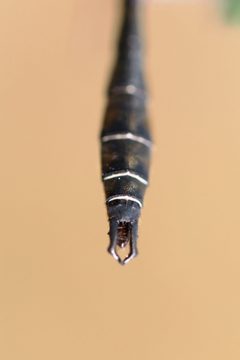
Externally identical to Whitehouse's emerald (Somatochlora whitehousei). Definitive separation requires examination of male shape and female subgenital plate . The faint yellow thoracic spot and overall metallic green, brown, and black coloration are visible field marks, but these overlap with related in the .
Images
Appearance
measure 39–48 mm (1.5–1.9 in) in length. The body is metallic green, brown, and black, with a faint yellow spot on the .
Habitat
Open fens containing pools of open water. The "muskeg emerald" reflects its association with muskeg peatland environments.
Distribution
to Canada. Range extends from Yukon and British Columbia eastward across the country to Nova Scotia and Newfoundland.
Seasonality
fly from June to August.
Life Cycle
Females lay by tapping into open water and floating vegetation. Males patrol over pools during reproductive activity. Specific details of egg, nymph, and stages are not documented in available sources.
Behavior
Males patrol over pools of open water. Females oviposit by tapping in open water and in floating vegetation.
Similar Taxa
- Somatochlora whitehouseiExternally identical; distinguished only by shape of male and female subgenital plate
More Details
Taxonomic note
Described by Hagen in 1861. The epithet "septentrionalis" refers to northern distribution.