
Dendroleontinae
Banks, 1899
antlions
Genus Guides
1Dendroleontinae is a of antlions (Myrmeleontidae) established by Banks in 1899. The subfamily contains multiple tribes including Acanthoplectrini, Bandidini, Dendroleontini, Nuglerini, Periclystini, and Voltorini, with diverse distributed across Asia, Africa, and Madagascar. Recent systematic revisions have clarified complex taxonomic histories, particularly for genera such as Epacanthaclisis and Gatzara, using combined morphological and molecular approaches. within this subfamily exhibit specialized morphological characters and have been subjects of biogeographic studies related to Himalayan uplift and island formation in East Asia.
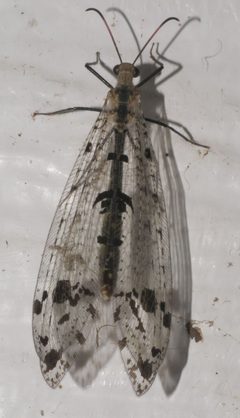
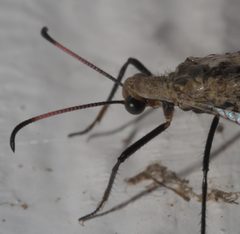
Pronunciation
How to pronounce Dendroleontinae: //ˌdɛn.droʊ.liˈɒn.tɪ.neɪ//
These audio files are automatically generated. While they are not always 100% accurate, they are a good starting point.
Identification
Dendroleontinae antlions can be distinguished from other Myrmeleontidae by specialized morphological characters, though specific diagnostic traits vary by tribe and . possess the typical antlion features of net-veined wings and elongated bodies. Larval identification has been accomplished through rearing and COI barcoding in some , suggesting molecular methods may be necessary for reliable stage identification in certain genera.
Images
Distribution
Dendroleontinae has a broad distribution spanning the Afrotropics, East Asia, Central Asia, and Madagascar. Specific documented ranges include: East to Central Asia for Epacanthaclisis; Tibet and East Asia for genus Gatzara and related Nepsalus; Madagascar and the Comoros for Cymothales bouvieri; and the African continent for related Cymothales . Biogeographic patterns suggest vicariance events related to Himalayan uplift and island formation have shaped current distributions.
Life Cycle
stages (larvae) have been documented for at least five Epacanthaclisis from China through rearing and COI barcoding, indicating that larval identification may require molecular confirmation. Otherwise, specific details for the as a whole are not established.
Similar Taxa
- MyrmeleontinaeAnother of Myrmeleontidae; Dendroleontinae is distinguished by tribal-level classification and associated morphological specializations, though specific differentiating characters require -level examination
- AcanthaclisinaeRelated antlion ; Dendroleontinae differs in tribal composition and has been subject to separate systematic revisions establishing distinct generic boundaries
More Details
Systematic complexity
within Dendroleontinae have undergone substantial taxonomic revision. The genus Gatzara was found to comprise two distinct clades, with most reassigned to Nepsalus based on combined morphological and mitochondrial phylogenomic evidence. Such revisions indicate that historical species assignments in this require careful re-evaluation.
Molecular identification
COI barcoding has been successfully employed to identify stages of Dendroleontinae , suggesting this molecular approach may be particularly valuable for larval identification where morphological characters are ambiguous or undescribed.
Sources and further reading
- BugGuide
- Wikipedia
- iNaturalist taxon
- NCBI Taxonomy
- Revision of the antlion genus Epacanthaclisis Okamoto, 1910 (Neuroptera: Myrmeleontidae: Dendroleontinae)
- Cymothales manselli sp. nov.: an unexpected new antlion species widely distributed in the Afrotropics (Neuroptera: Myrmeleontidae: Dendroleontinae)
- Unveiling the Evolutionary History of a Puzzling Antlion GenusGatzaraNavás (Neuroptera: Myrmeleontidae: Dendroleontinae) Based on Systematic Revision, Molecular Phylogenetics, and Biogeographic Inference