
Ululodes
Currie, 1900
owlfly
Species Guides
7- Ululodes arizonensis
- Ululodes bicolor
- Ululodes floridanus
- Ululodes macleayanus(Macleay's Owlfly)
- Ululodes mexicanus
- Ululodes nigripes
- Ululodes quadripunctatus(Four-spotted Owlfly)
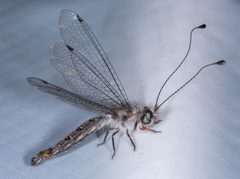
Ululodes is a of owlflies ( ) in the tribe Ululodini, containing at least 27 described . are characterized by divided , clubbed , and wings with yellow to red coloration and dark, prominent venation. Larvae are predatory, lying on the ground with trap-jaws held open to ambush prey. The genus is found in sand prairie and other open, sandy environments.
Pronunciation
How to pronounce Ululodes: /uːluːˈloʊdiːz/
These audio files are automatically generated. While they are not always 100% accurate, they are a good starting point.
Identification
Divided distinguish Ululodes from other . The combination of clubbed , yellow to red wings with dark venation, and divided eyes separates it from similar neuropterans such as (which lack clubbed antennae) and butterflies (which have scaled wings).
Images
Habitat
Sand prairies, open sandy barrens, and other dry, sandy environments with sparse vegetation.
Distribution
North America; documented from Missouri sand prairies and other sandy across the continent.
Seasonality
active in autumn, with observations from September in Missouri sand prairies.
Life Cycle
Holometabolous development with predatory larval stage. Larvae lie on the ground surface with jaws held open, ambushing prey that makes contact. Prey is paralyzed and consumed at leisure.
Behavior
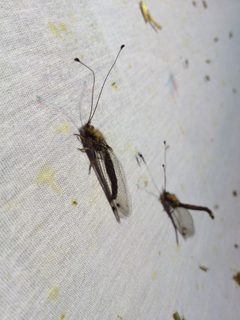
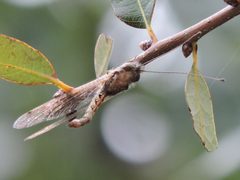
adopt a cryptic resting posture with projecting from the perch, resembling a twig. Larvae are sit-and-wait that camouflage themselves with sand and debris. The slightest contact with the larval jaws triggers them to snap shut on prey.
Ecological Role
in sandy , controlling of small ground-dwelling arthropods.
Human Relevance
Subject of entomological study; larvae serve as examples of specialized predatory adaptations in insects.
Similar Taxa
- MyrmeleonBoth are neuropteran insects with predatory larvae in sandy , but Myrmeleon (antlions) have different and larvae construct pitfall traps rather than lying exposed on the surface.
- PalparesBoth are with large size and patterned wings, but Palpares lacks divided and has more elaborate wing patterns for camouflage in dappled shade.
More Details
Taxonomic Note
There is conflicting placement in sources: (GBIF, Catalogue of Life) versus Myrmeleontidae (Wikipedia, NCBI). Modern treatments place Ululodes in Ascalaphidae (owlflies), distinct from Myrmeleontidae (antlions), though both families are closely related within Neuroptera.
Larval Biology
Unlike antlion larvae in the Myrmeleon, which dig pitfall traps, Ululodes larvae are free-living on the ground surface, relying on camouflage and rapid jaw closure to capture prey.