
Nallachius
Navás, 1909
pleasing lacewings
Species Guides
2- Nallachius americanus(pleasing lacewing)
- Nallachius pulchellus(pleasing lacewing)
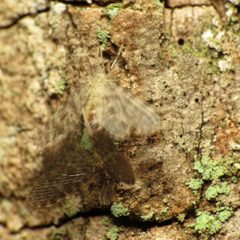
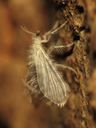
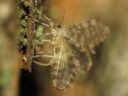
Nallachius is a of pleasing lacewings in the Dilaridae, established by Navás in 1909. The genus contains more than 20 described distributed primarily in the Neotropical region. Members are characterized by their distinctive wing venation and relatively broad wings compared to other dilarid genera. are typically and attracted to light.
Pronunciation
How to pronounce Nallachius: /næˈlækiəs/
These audio files are automatically generated. While they are not always 100% accurate, they are a good starting point.
Identification
Nallachius can be distinguished from other Dilaridae by their forewing venation, particularly the arrangement of crossveins and the shape of the pterostigma. The forewing has a relatively broad costal space and reduced number of crossveins in the radial sector compared to some related genera. Males possess uniquely modified genital structures that are species-specific and important for identification.
Images
Distribution
Primarily Neotropical, with recorded from Central and South America including Mexico, Rica, Panama, Colombia, Ecuador, Peru, Brazil, and Argentina. Some species extend into the southern Nearctic region.
Behavior
are and frequently collected at light traps. Males are known to produce substrate-borne vibrations during courtship, a characteristic of the Dilaridae.
Similar Taxa
- DilarAlso in Dilaridae, but Dilar have narrower wings with more numerous crossveins in the radial sector and different male genitalia structure.
- NothodilarAnother dilarid , distinguished by differences in wing shape and venation pattern, particularly in the arrangement of in the anal area of the hindwing.