Eremochrysa punctinervis
(McLachlan, 1869)
green lacewing
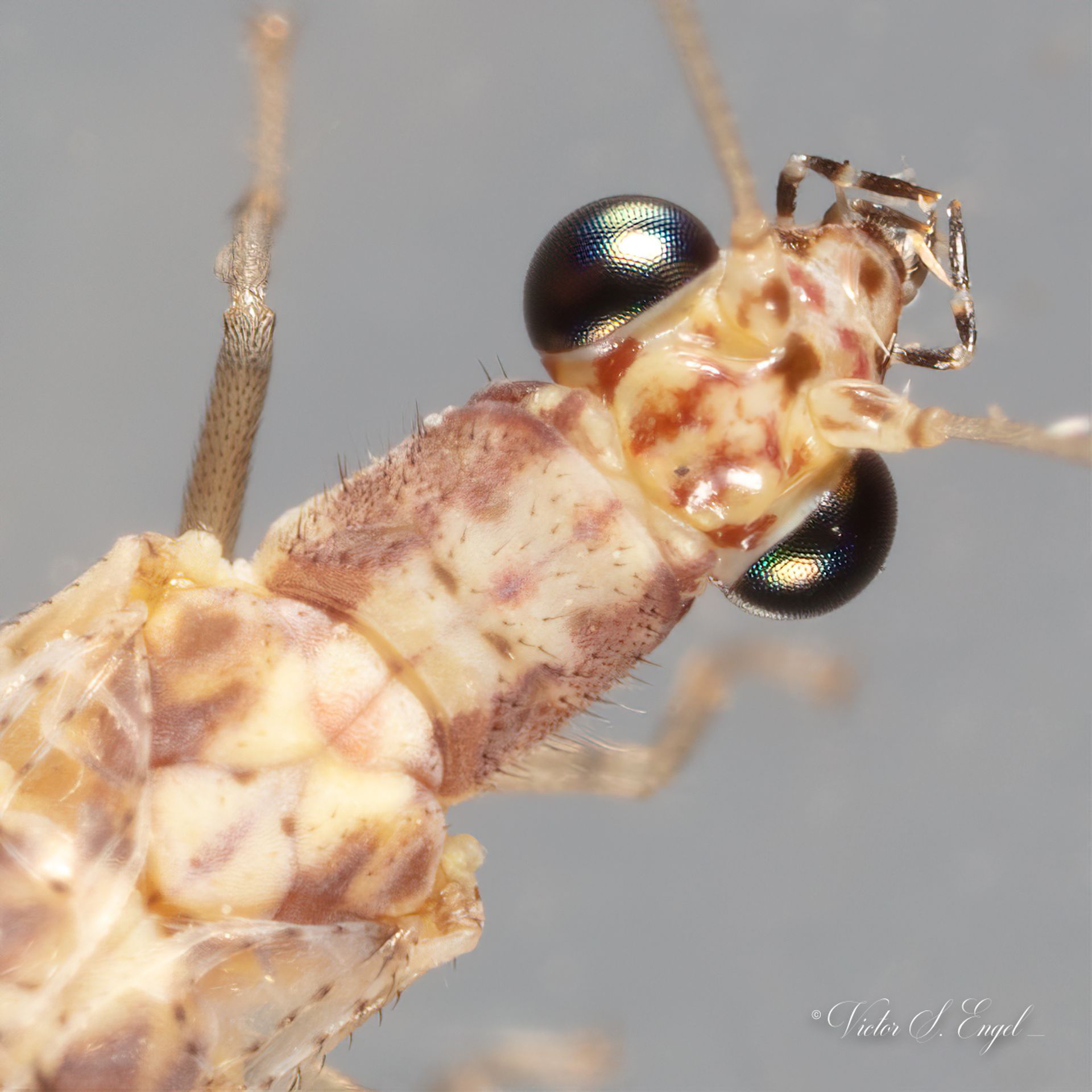
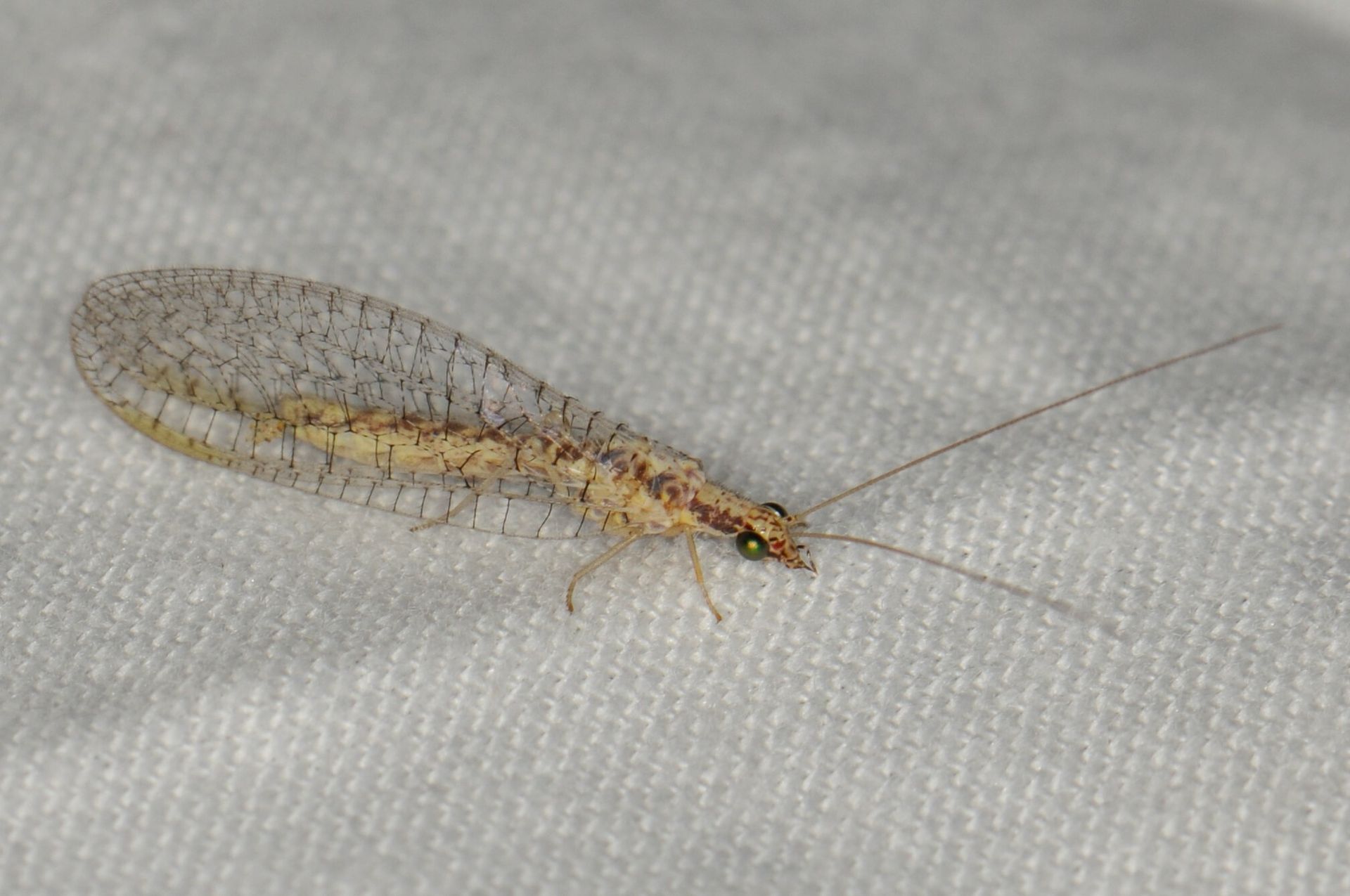
Eremochrysa punctinervis is a of green lacewing in the Chrysopidae. It occurs in Central America and North America. The species was originally described as Chrysopa punctinervis by McLachlan in 1869. It has been documented in Oklahoma's Gloss Mountains, where individuals have been photographed using specialized macrophotography techniques to capture their delicate features against blue sky backgrounds.
Pronunciation
How to pronounce Eremochrysa punctinervis: /ɛrɛmoʊˈkraɪsə ˌpʌŋktɪˈnɜrvɪs/
These audio files are automatically generated. While they are not always 100% accurate, they are a good starting point.
Identification
Identification to level within Eremochrysa requires examination of wing venation patterns. The specific epithet 'punctinervis' refers to punctate (dotted) venation characteristics. Precise identification has been achieved using Frank & Slosser (1996), 'An Illustrated Guide to the Insects of the Northern Texas Rolling Plains'. The long, delicate and overall body form are characteristic of green lacewings, but species-level determination relies on detailed wing venation analysis.
Images
Habitat
Documented from the Gloss Mountains in Major County, Oklahoma, a region characterized by gypsum hills and mixed grassland-prairie . The has been photographed on vegetation in open, exposed settings where wind exposure is significant. Available records suggest association with dry, western where vegetation is sparse.
Distribution
Central America and North America. Specific documented localities include Major County, Oklahoma, USA. GBIF records indicate presence in Middle America and North America broadly.
Seasonality
activity documented in early June in Oklahoma. Specific seasonal patterns across the range are not well documented.
Behavior
have been observed perching on exposed vegetation. The ' long, delicate are highly susceptible to wind movement, which creates challenges for photography and suggests adults may be sensitive to air currents in their natural .
Human Relevance
Has been used as a photographic subject to demonstrate 'blue-sky' macrophotography techniques for insects with delicate, detailed features. The presents particular challenges for field photography due to wind sensitivity of its .
Similar Taxa
- Other Eremochrysa speciesCongeneric share green lacewing and require detailed wing venation examination for separation; E. punctinervis is distinguished by its punctate wing venation pattern.
- Chrysopa speciesFormerly classified in this ; separation requires examination of generic-level characters in wing venation and genitalia.
More Details
Nomenclatural history
Originally described as Chrysopa punctinervis McLachlan, 1869; subsequently transferred to Eremochrysa. Catalogue of Life currently lists this name as a synonym, though GBIF and NCBI treat it as accepted.
Photographic documentation
A well-documented photograph from Gloss Mountains, Oklahoma was identified via Frank & Slosser (1996) and has been used to illustrate technical challenges in insect macrophotography, specifically regarding wind-induced movement of during long exposures.