
Pedetontus
Silvestri, 1911
jumping bristletails
Species Guides
2- Pedetontus saltator(jumping bristletail)
- Pedetontus submutans
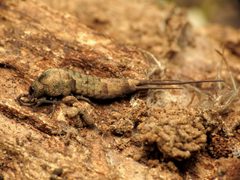
Pedetontus is a of jumping bristletails (order ) in the Machilidae, first described by Silvestri in 1911. The genus contains approximately 10 described , with additional cryptic diversity identified through molecular studies, particularly in China where 17 species have been documented. Species are wingless and retain numerous ancestral characteristics including monocondylous and well-developed abdominal appendages. Recent mitogenomic studies indicate that current morphological classification within the genus requires revision due to paraphyly and cryptic .
Pronunciation
How to pronounce Pedetontus: //pəˈdɛtənˌtus//
These audio files are automatically generated. While they are not always 100% accurate, they are a good starting point.
Identification
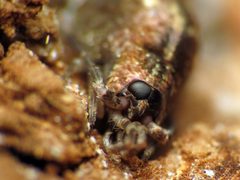
Members of Pedetontus can be distinguished from related by the subgenus Verhoeffilis characteristics: paired ocelli that are shoe-shaped and submedian in position; two pairs of retractile vesicles on abdominal segments II–V; male genitalia with parameres restricted to coxite IX, small opening, and genitalia not exceeding coxite IX; and a primary-type ovipositor. These traits contrast with the related genus Pedetontinus, which possesses a tertiary-type ovipositor. Molecular studies have revealed cryptic that are morphologically indistinguishable, indicating that genetic analysis may be necessary for definitive identification.
Images
Habitat
inhabit dark, moist microhabitats including leaf litter, mosses, lichens, grasslands, forest floor debris, tree bark, decaying wood, beneath stones, within soil, and coastal rocks. Specific documented localities include mountainous and forested regions in southern China (Zhejiang, Guangxi, Guangdong), northeastern China (Liaoning, Jilin, Hebei), and temperate regions including Vermont, USA.
Distribution
Documented from East Asia, Southeast Asia, Russia (Primorskii Territory), and North America. In China, 17 occur across multiple provinces including Fujian, Anhui, Shandong, Zhejiang, Hainan, Taiwan, Guangxi, and Guangdong. The type locality of P. silvestrii is the Korean Peninsula. GBIF records indicate presence in Vermont, USA.
Diet
Has been observed to feed on , lichens, and mosses in reared specimens and natural .
Life Cycle
Juveniles and differ only in body size and sexual maturity. Individuals throughout their entire life, a characteristic of the order .
Behavior
activity pattern; individuals seek shelter under tree bark or within leaf litter during daylight hours to avoid and harsh environmental conditions. Wingless and unable to fly. Exhibits cryptic lifestyle with retention of numerous plesiomorphic characteristics.
Similar Taxa
- PedetontinusDistinguished by tertiary-type ovipositor versus the primary-type ovipositor in Pedetontus; Pedetontinus forms a monophyletic clade while sampled Pedetontus are not monophyletic based on molecular .
- Other Machilidae generaPedetontus (subgenus Verhoeffilis) is distinguished by specific arrangements of ocelli, retractile vesicles, and male genitalia as detailed in identification characteristics.
More Details
Taxonomic instability
Recent mitogenomic studies indicate that the current morphological classification system for Pedetontus requires revision. Machilidae and Machilinae are , and sampled Pedetontus do not form a . Four cryptic species lineages have been identified within P. silvestrii alone based on mitochondrial genomic analysis.
Molecular evolution
Positive selection signals have been detected in mitochondrial protein-coding genes (Cytb, ATP6, COI) in response to temperate versus tropical environmental conditions, suggesting adaptive evolution to climate.
Species diversity
While approximately 10 were historically described, recent work from China alone has documented 17 species, including six newly described from southern China in 2025, indicating substantial undescribed diversity.
Sources and further reading
- BugGuide
- Wikipedia
- GBIF taxonomy match
- iNaturalist taxon
- NCBI Taxonomy
- Catalogue of Life
- Comparative Mitogenomics of Pedetontus and Pedetontinus (Insecta: Archaeognatha) Unveils Phylogeny, Divergence History, and Adaptive Evolution.
- Six New Species of Genus Pedetontus Silvestri, 1911 (Microcoryphia: Machilidae), from Southern China.
- Morpho-Molecular Discordance and Cryptic Diversity in Jumping Bristletails: A Mitogenomic Analysis of Pedetontus silvestrii (Insecta: Archaeognatha: Machilidae).