
Panorpa nebulosa
Westwood, 1846
Clouded Scorpionfly
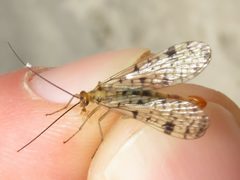
Panorpa nebulosa is a of in the Panorpidae, distributed across North America. It is one of several species in the Panorpa found on the continent. Scorpionflies in this family are characterized by their distinctive elongated rostrum and, in males, an upturned resembling a 's stinger. The species is known to occur in forested , though specific ecological details remain limited in the available literature.
Pronunciation
How to pronounce Panorpa nebulosa: /pəˈnɔːrpə nɛbjʊˈloʊsə/
These audio files are automatically generated. While they are not always 100% accurate, they are a good starting point.
Images
Distribution
North America; records include the United States (including Vermont) and presumably Canada based on distribution patterns.
Similar Taxa
- Panorpa helenaBoth are common North American scorpionflies in the same with yellow wings and dark banding patterns; P. helena has three complete bands across the wings and an anal horn on the sixth abdominal in males, features not mentioned for P. nebulosa.
- Panorpa nuptialisAnother North American ; differs in distribution and preferences, with P. nuptialis documented from Texas and associated with early cadaver in forensic studies.
More Details
Taxonomic Note
The specific epithet 'nebulosa' (meaning 'clouded') refers to the wing pattern. Authorship dates vary in sources: Westwood 1842 (Catalogue of Life) versus Westwood 1846 (GBIF, NCBI); 1846 is more widely accepted in modern databases.
Research Context
While P. nebulosa itself has limited published biological data, related in the have been subjects of research, suggesting potential for similar ecological roles in decomposition .
Sources and further reading
- BugGuide
- Wikipedia
- GBIF taxonomy match
- iNaturalist taxon
- NCBI Taxonomy
- Catalogue of Life
- One-Shot Wednesday: Panorpa helena scorpionfly | Beetles In The Bush
- The Case of the Mysterious Mesosa Longicorn Beetle
- Forensic Entomology is More than Just Blow Flies and Beetles
- May | 2012 | Beetles In The Bush | Page 2
- One-shot Wednesday | Beetles In The Bush
- Let’s make a deal! | Beetles In The Bush