
Neoalbertia constans
(Edwards, 1881)
Grape Leaf Skeletonizer
Neoalbertia constans is a zygaenid commonly known as the Grape Leaf Skeletonizer. The species was originally described as Lycomorpha constans by Edwards in 1881 and later transferred to the Neoalbertia. It is recognized as a defoliating pest of grapevines in North America. The reflects the distinctive feeding damage caused by larvae, which consume leaf tissue between while leaving the vascular framework intact.
Pronunciation
How to pronounce Neoalbertia constans: /ˌniː.oʊˌælˈbɜːrtiə ˈkɒnstænz/
These audio files are automatically generated. While they are not always 100% accurate, they are a good starting point.
Identification
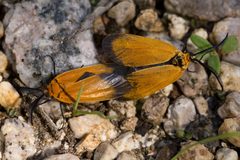
are small, with metallic blue-black or greenish coloration typical of many zygaenids. The Neoalbertia is distinguished from related genera such as Harrisina by genitalic characters and wing venation patterns. Larvae are yellow with transverse black bands and possess clusters of stinging setae. The skeletonized leaf damage caused by feeding larvae is diagnostic and distinguishes this from other grape-feeding Lepidoptera.
Images
Habitat
Associated with cultivated and wild grapevines (Vitis spp.). Found in vineyards, riparian corridors, and other areas supporting plant growth.
Distribution
North America. Records from the United States, particularly in regions with commercial grape production including California and eastern states.
Diet
Larvae feed on grape leaves (Vitis spp.), consuming mesophyll tissue between leaf .
Host Associations
- Vitis - larval foodplantgrapevines
- Vitis vinifera - larval foodplantcultivated wine grape
- Vitis labrusca - larval foodplantfox grape
Ecological Role
Larval defoliation can reduce photosynthetic capacity of grapevines. The functions as a secondary consumer in vineyard and riparian . Stinging setae on larvae provide defense against vertebrate .
Human Relevance
Economic pest of commercial grape production. Larval feeding damage reduces vine vigor and crop yield. Management in vineyards may require monitoring and intervention.
Similar Taxa
- Harrisina americanaAlso a grape-feeding zygaenid with similar larval damage; distinguished by and genitalia
- Harrisina brilliansWestern North American grape skeletonizer; overlapping range and use in some regions