
Trosia
Hübner, 1820
Species Guides
1Trosia is a of in the Megalopygidae, established by Jacob Hübner in 1820. The genus contains approximately 17 described distributed primarily in the Neotropical region. Members of this genus are classified within the Trosiinae, which is to the New World. The genus has been documented in citizen science platforms with over 2,800 observations, indicating moderate field recognition.
Pronunciation
How to pronounce Trosia: /ˈtroʊ.si.ə/
These audio files are automatically generated. While they are not always 100% accurate, they are a good starting point.
Identification
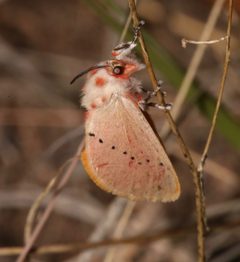
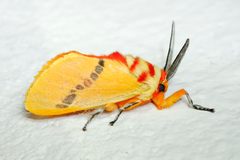
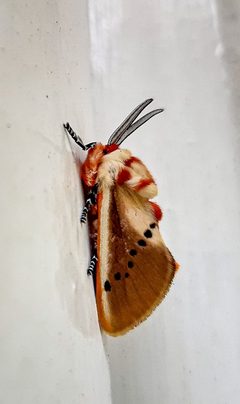
Trosia can be distinguished from other Megalopygidae by features of the male genitalia, particularly the structure of the valvae and . Externally, many species exhibit combinations of , ochraceous, or bicolored forewings with varying degrees of punctation or banding patterns. The genus is placed in the Trosiinae based on morphological synapomorphies including wing venation and abdominal tympanal organ structure. Species-level identification requires examination of genitalic characters and often cannot be determined from photographs alone.
Images
Distribution
Neotropical region, with records from Central and South America. Specific country-level distributions vary by .
Similar Taxa
- MegalopygeBoth belong to Megalopygidae and share flannel appearance, but Megalopyge is placed in Megalopyginae and lacks the diagnostic genitalic characters of Trosiinae; also primarily Nearctic in distribution versus Neotropical for Trosia.
- LagoaAnother megapygid with flannel-like larvae, but distinguished by wing pattern elements and male genitalia structure; some overlap in distribution with Trosia.
More Details
Taxonomic History
The was described by Jacob Hübner in 1820. The Trosiinae was established to accommodate this genus and related Neotropical , separating them from the primarily Nearctic Megalopyginae. The classification within Zygaenoidea reflects ongoing research into the phylogenetic relationships of flannel moths.
Species Diversity
The includes 17 described : T. acea, T. bicolor, T. circumcincta, T. dimas, T. fallax, T. flavida, T. nigropuncta, T. nigropunctigera, T. nigrorufa, T. ochracea, T. pellucida, T. pulla, T. roseipuncta, T. rufa, T. semirufa, T. xinga, T. zernyi, and T. zikani. Several species were described by Hopp (1922, 1930) and Dognin (1911, 1922) during the early 20th century.