Prolimacodes badia
(Hübner, 1835)
Skiff Moth
Prolimacodes badia, commonly known as the skiff moth, is a small in the Limacodidae (slug caterpillar moths). The is widely distributed across eastern North America. are active from late spring through summer, and larvae feed on leaves of numerous woody plants.
Pronunciation
How to pronounce Prolimacodes badia: /prɒlɪˈmeɪkəˌdiːz ˈbeɪdiə/
These audio files are automatically generated. While they are not always 100% accurate, they are a good starting point.
Identification
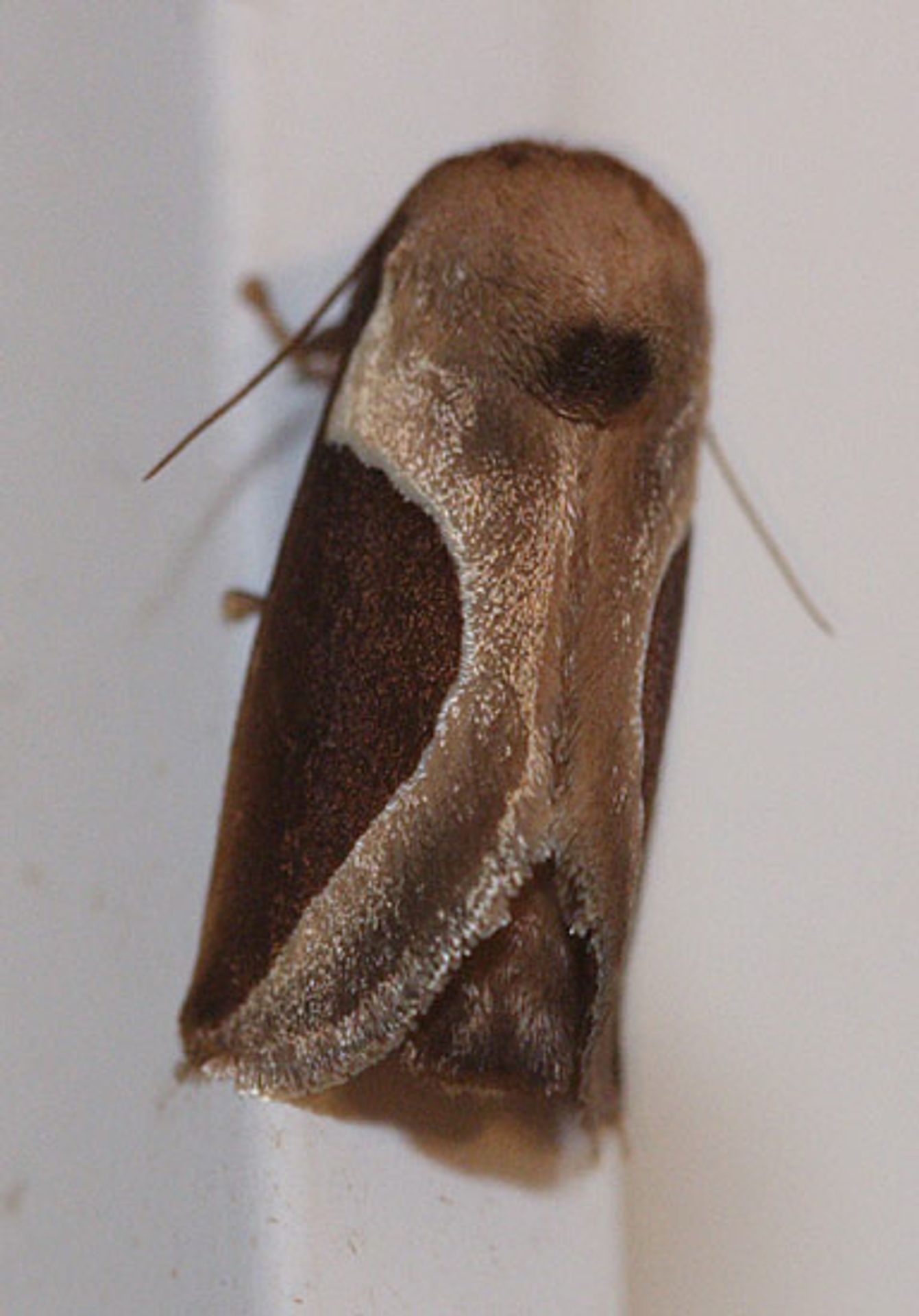
The triangular, somewhat boat-shaped resting posture of the forewings distinguishes from most other small brown . The combination of small size (24–35 mm wingspan), brown coloration with variable darker markings, and the characteristic Limacodidae resting posture—wings held tent-like or flattened—separates it from superficially similar geometrid or noctuid moths. Larvae are recognized by their slug-like form with reduced , typical of the .
Images
Appearance
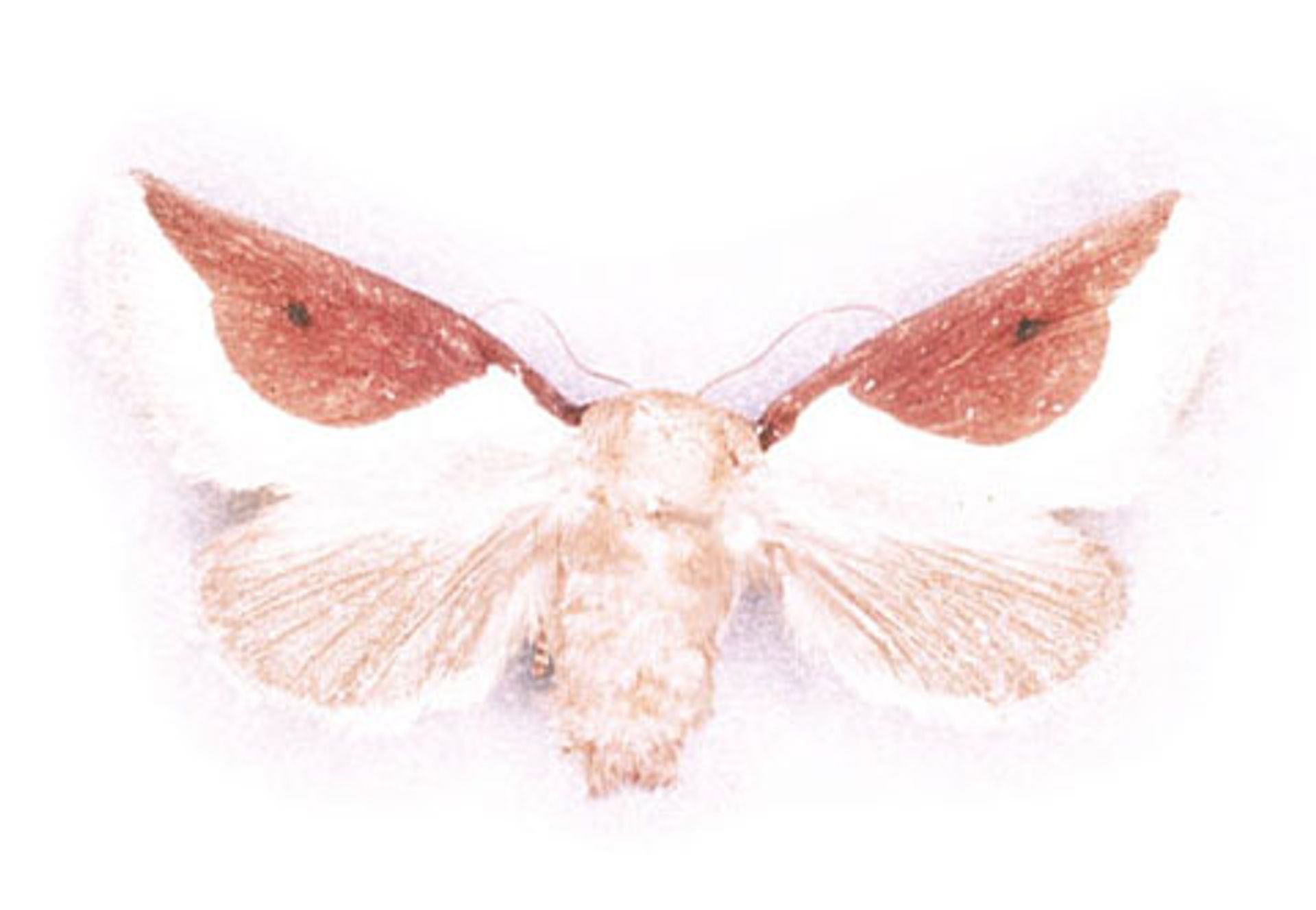
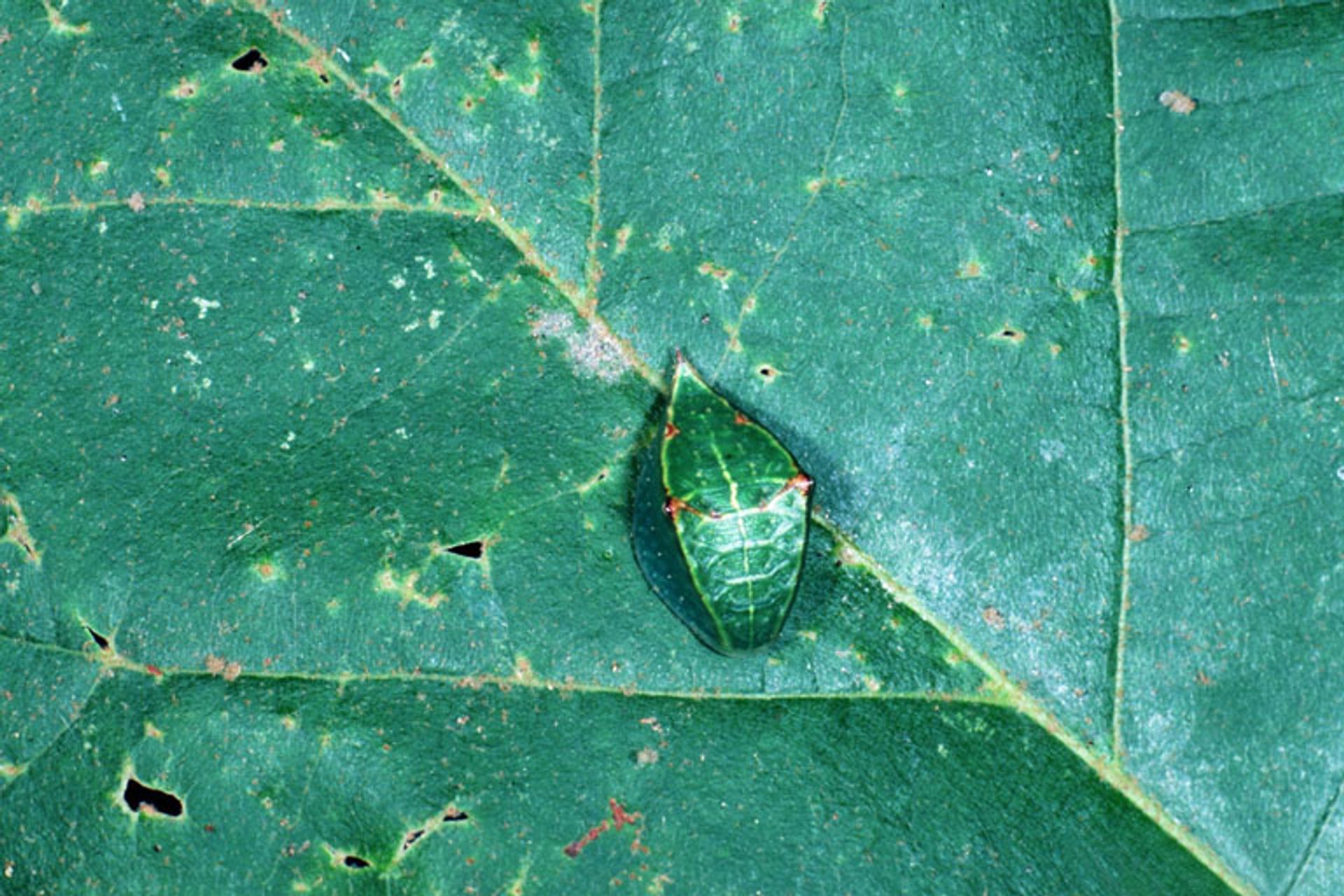
have a wingspan of 24–35 mm. The forewings are brown with variable darker markings and a somewhat triangular or skiff-like shape when at rest, giving the its . The hindwings are paler. Larvae are slug-like, as typical for Limacodidae, with reduced and a smooth, somewhat flattened body.
Habitat
Associated with deciduous forests and woodlands, suburban areas with trees, and shrubby . Larval plants include trees and shrubs in mixed hardwood forests.
Distribution
Eastern North America: from New Hampshire south to Florida, west to southern Ontario, Missouri, Arkansas, and Mississippi.
Seasonality
are active from May to September. The extended period suggests multiple or a prolonged pattern.
Diet
Larvae feed on leaves of birch (Betula), blueberry (Vaccinium), cherry (Prunus), chestnut (Castanea), American hophornbeam (Ostrya virginiana), oak (Quercus), poplar (Populus), sweet gale (Myrica gale), and willow (Salix).
Host Associations
- Betula - larval foodplantbirch
- Vaccinium - larval foodplantblueberry
- Prunus - larval foodplantcherry
- Castanea - larval foodplantchestnut
- Ostrya virginiana - larval foodplantAmerican hophornbeam
- Quercus - larval foodplantoak
- Populus - larval foodplantpoplar
- Myrica gale - larval foodplantsweet gale
- Salix - larval foodplantwillow
Life Cycle
Complete with , larval, pupal, and stages. Larvae are slug-like with reduced , typical of Limacodidae. likely occurs in a cocoon on or near the plant, though specific details are not well documented.
Behavior
are and have been observed at ultraviolet light sources. The derives from the adult's resting posture, with forewings held in a skiff- or boat-like configuration.
Ecological Role
Larvae function as herbivores on woody plants, consuming leaf tissue of numerous tree and shrub . Their broad range suggests they play a role in nutrient cycling in deciduous forest , though they are not considered economically significant defoliators.
Human Relevance
Not an economically important pest. Occasionally encountered by enthusiasts at light traps. The is documented in citizen science platforms including iNaturalist and National Moth Week events.
Similar Taxa
- Other LimacodidaeShare slug-like larvae and similar resting postures; distinguished by wing pattern, size, and geographic range
- Small GeometridaeSimilar size and brown coloration; geometrids typically have more slender bodies and hold wings flat or slightly folded, not in the triangular skiff-like posture
- Small NoctuidaeSimilar size and dull coloration; noctuids usually have more robust bodies and different wing venation and resting posture
More Details
Taxonomic history
Originally described as Noctua badia by Hübner in 1835 (or 1822 according to some sources), later transferred to Prolimacodes.
Observation frequency
The is relatively well-documented, with over 5,800 observations on iNaturalist as of 2024, indicating it is commonly encountered within its range.