
Zelleria retiniella
Forbes, 1923
Brindled zelleria
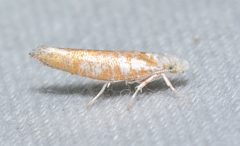
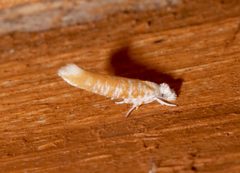
Zelleria retiniella is a of in the Yponomeutidae, commonly known as the Brindled zelleria. It was described by Forbes in 1923. The species is part of a whose larvae are frequently associated with coniferous . Observations suggest it is active during warmer months in temperate regions.
Pronunciation
How to pronounce Zelleria retiniella: //zɛˈlɛriə ˌrɛtɪniˈɛlə//
These audio files are automatically generated. While they are not always 100% accurate, they are a good starting point.
Identification
Distinguished from other Zelleria by genitalic characters and subtle wing pattern differences. The specific epithet and "Brindled zelleria" suggest a streaked or mottled forewing pattern. Accurate identification requires dissection and comparison with or authoritative keys.
Images
Appearance
are small with wingspans typical of the Yponomeutidae . The name "retiniella" suggests association with resin or conifers, though specific wing pattern details require specimen examination. Forewings are likely marked with fine striations or mottled patterns characteristic of the .
Habitat
Associated with coniferous forests and plantations, particularly those containing Pinus . Larval consists of needle-bearing branches where feeding and shelter construction occur.
Distribution
Recorded from eastern North America, with iNaturalist observations concentrated in the northeastern United States and adjacent Canada. The type locality and precise range require verification from primary literature.
Seasonality
have been observed from May through August, with peak activity in June and July. Larval presence likely extends from spring through early summer.
Diet
Larvae feed on conifer needles, specifically reported from Pinus (pine) . The specific epithet "retiniella" references resin, indicating association with resinous conifers.
Host Associations
- Pinus - larval conifer needles
Life Cycle
Complete with , larva, pupa, and stages. Larvae construct silken webs or shelters among conifer needles. occurs within the larval shelter or in detritus.
Behavior
Larvae are gregarious web-builders, feeding within silken shelters constructed among needles. are and attracted to light.
Ecological Role
As a folivore on conifers, larvae contribute to nutrient cycling and serve as prey for and other . may cause minor defoliation of ornamental or plantation pines.
Human Relevance
Occasional pest of ornamental pines in urban and suburban settings. Not considered economically significant for forestry. Of interest to lepidopterists studying conifer-associated micromoths.
Similar Taxa
- Zelleria haimbachiSimilar size, , and use on Pinus; distinguished by genitalic and subtle wing pattern differences
- Zelleria pyriCongeneric with overlapping range; requires dissection for reliable separation
- Yponomeuta speciesSimilar -level characteristics including small size and web-building larvae; distinguished by association (Yponomeuta typically on broadleaf trees) and wing venation
More Details
Etymology
The specific epithet "retiniella" derives from Latin "resina" (resin) with the diminutive suffix "-ella", referencing the resinous conifer of the larva.
Taxonomic history
Described by William T.M. Forbes in 1923. The has remained in Zelleria without subgeneric assignment. Some authors have suggested Zelleria may be , but no formal reclassification has occurred.