
Proleucoptera
Busck, 1902
Species Guides
1Proleucoptera is a of microlepidoptera in the Lyonetiidae, established by Busck in 1902. in this genus are leaf-mining with extremely small wingspans, often under 5 mm. The genus is currently treated as a synonym of Leucoptera, though it was historically recognized as distinct. Members are known for mining leaves of plants, with some species reaching densities sufficient to cause noticeable defoliation.
Pronunciation
How to pronounce Proleucoptera: /prɔ.leuː.kɔp.ˈtɛ.ra/
These audio files are automatically generated. While they are not always 100% accurate, they are a good starting point.
Identification
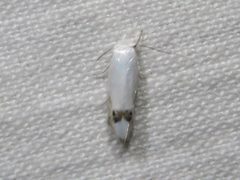
Proleucoptera are distinguished from the similar Proleucoptera smilaciella (now Leucoptera) by wing pattern details: the first golden streak (fascia) is broader and less oblique, positioned further from the wing base, and more squarish in shape (versus three times as long as wide in P. smilaciella). P. smilaciella additionally shows three to four dark lines converging on the apex, rarely evident in Proleucoptera albella, and has a smaller silvery-gray spot completely surrounded by golden yellow banding. Worn specimens of both species can be difficult to separate. The minute size (4–5 mm wingspan) and white ground color with golden streaks separate this group from most other Lyonetiidae.
Images
Habitat
Associated with riparian and woodland supporting plants in the Populus. Larval habitat is within leaf mines of host plant foliage. Specific moisture, elevation, or structural habitat requirements for are not documented.
Distribution
North America, including western and eastern regions. Documented from California, Arizona, Colorado, and Vermont. Distribution records also indicate presence in Denmark, Norway, and Sweden, though these may represent taxonomic confusion with related Leucoptera given the synonym status.
Seasonality
activity period not explicitly documented. occurs in the pupal stage, suggesting adult in spring or summer. Final-instar larvae have been observed descending from trees on silken threads, indicating late-season larval activity.
Diet
Larvae feed on Populus deltoides (eastern cottonwood), mining leaves. Feeding occurs as full-depth leaf mines, often communally. Heavy can defoliate entire branches.
Host Associations
- Populus deltoides - larval Eastern cottonwood; larvae mine leaves, causing defoliation at high densities
Life Cycle
Females deposit whitish, partially translucent in clusters on leaves. Larvae develop through feeding stages within full-depth leaf mines, reaching 5.0–6.5 mm in length and 0.8–0.9 mm in width at maturity. Mature larvae exit mines and spin white, spindle-shaped cocoons beneath two parallel silken bands that meet in the middle. Cocoons are spun on leaves or larvae drop to ground or lower vegetation to pupate. occurs in the pupal stage.
Behavior
Larvae feed communally within leaf mines. Final-instar larvae descend from trees on silken threads, a that can create nuisance conditions for humans beneath infested trees. This mass descent behavior has been observed in Arizona and Colorado .
Ecological Role
Leaf-mining herbivore on Populus. At high densities, larvae function as significant defoliators capable of damaging entire branches. The contributes to natural herbivory pressure on riparian cottonwood and may influence local tree health and productivity.
Human Relevance
Considered a minor pest of ornamental and native cottonwoods. Heavy can cause aesthetic damage and branch defoliation. The mass descent of larvae on silken threads has been reported as a nuisance to humans in Arizona. No significant economic impact on timber or commercial agriculture is documented.
Similar Taxa
- LeucopteraProleucoptera is currently synonymized under Leucoptera; were historically separated based on wing pattern proportions but are now treated as congeneric.
- Proleucoptera smilaciella (now Leucoptera smilaciella)Historically confused with P. albella; distinguished by narrower, more oblique first fascia positioned nearer the wing base, presence of converging dark lines, and smaller silvery spot with complete golden yellow surround.
More Details
Taxonomic Status
Proleucoptera Busck, 1902 is currently treated as a synonym of Leucoptera Hübner, [1825] in Catalogue of Life and GBIF. The type and included species have been transferred to Leucoptera. Historical literature continues to reference Proleucoptera for species such as P. albella (now Paraleucoptera albella or Leucoptera albella depending on classification system) and P. smilaciella.
Specimen Handling
The minute size of Proleucoptera (4–5 mm wingspan) presents challenges for museum preparation. Spreading wings of such microlepidoptera requires specialized techniques and magnification, as noted in curation work at the Bohart Museum of Entomology.