Argyresthia conjugella
Zeller, 1839
Apple Fruit Moth
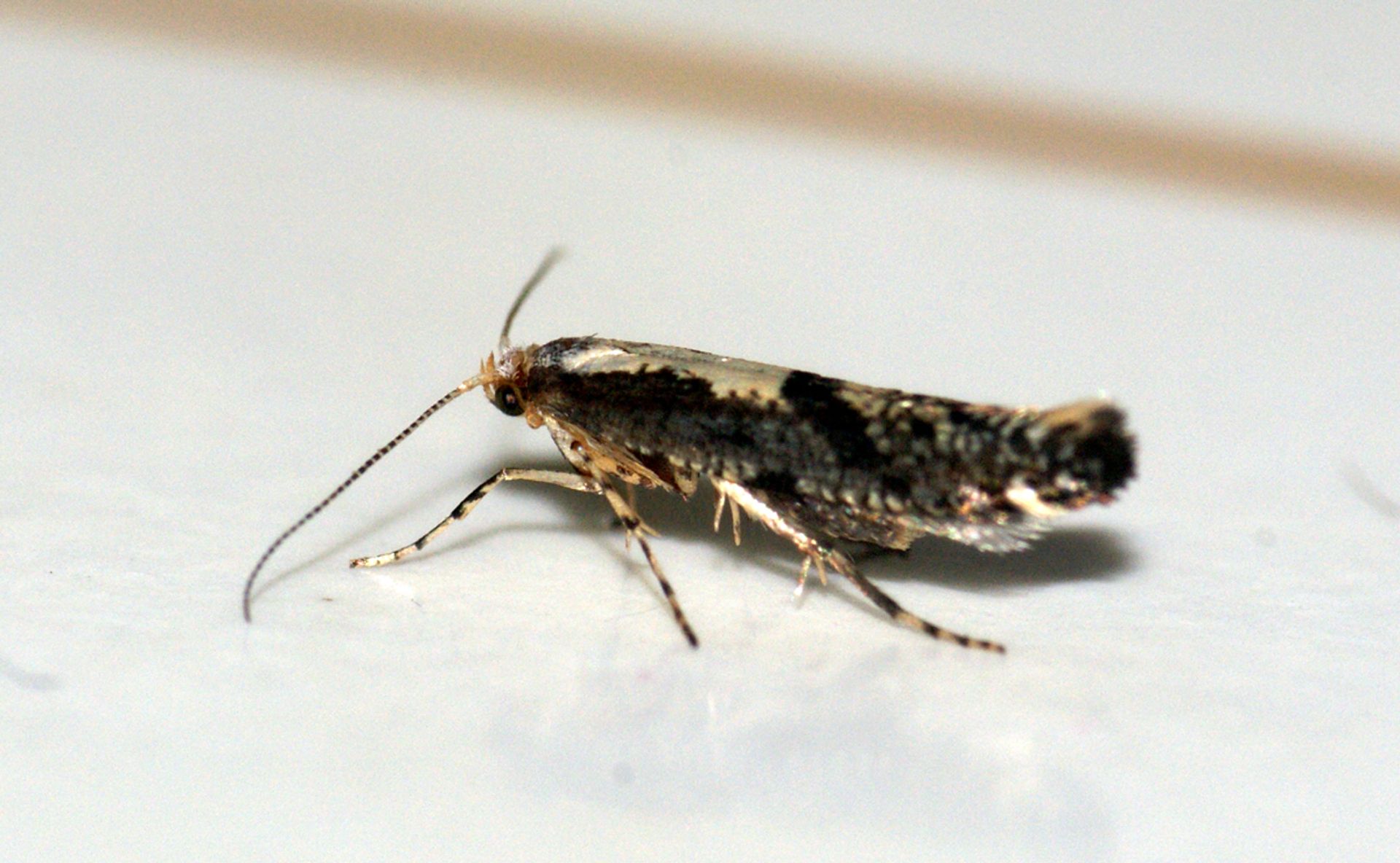
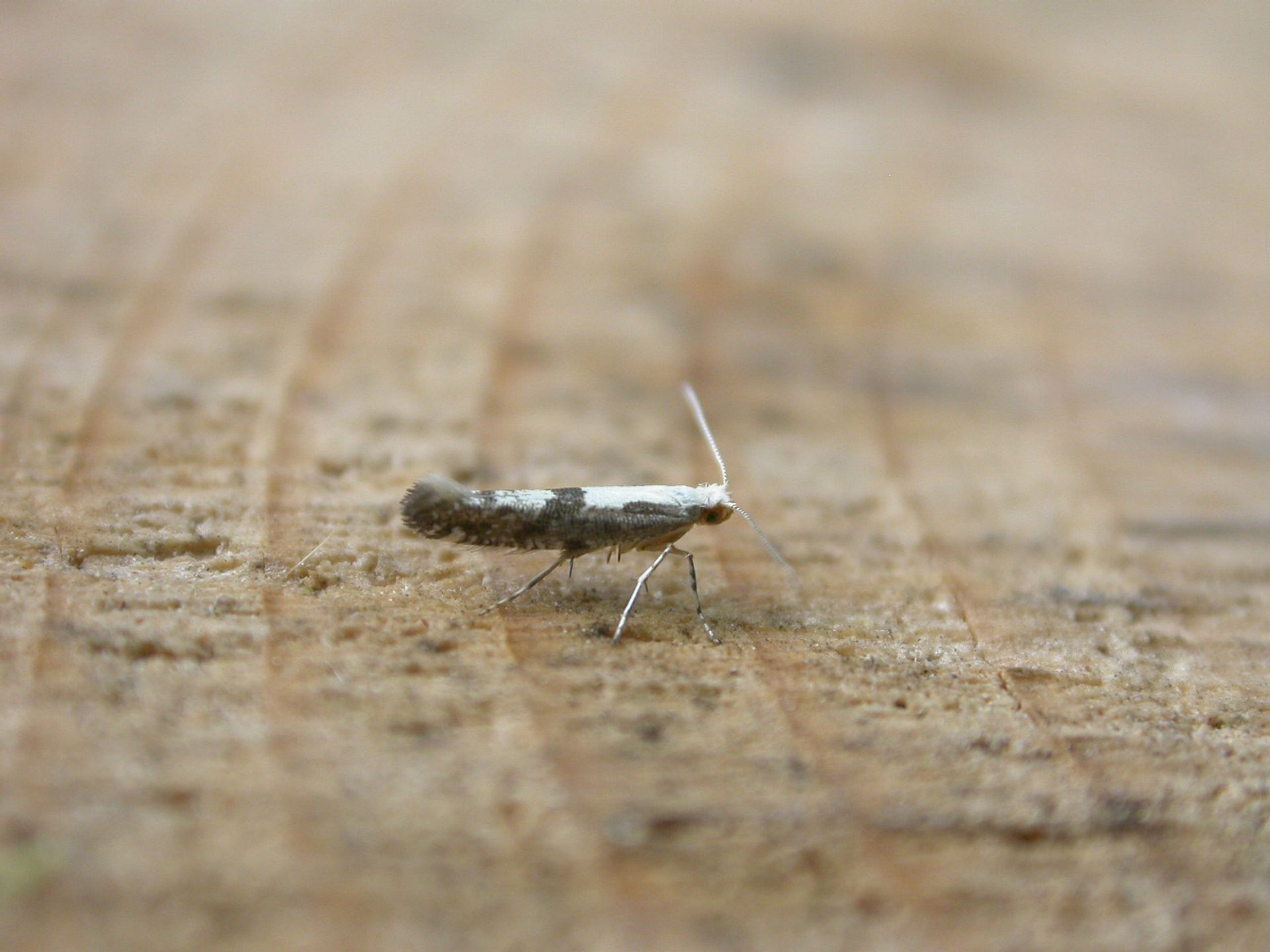
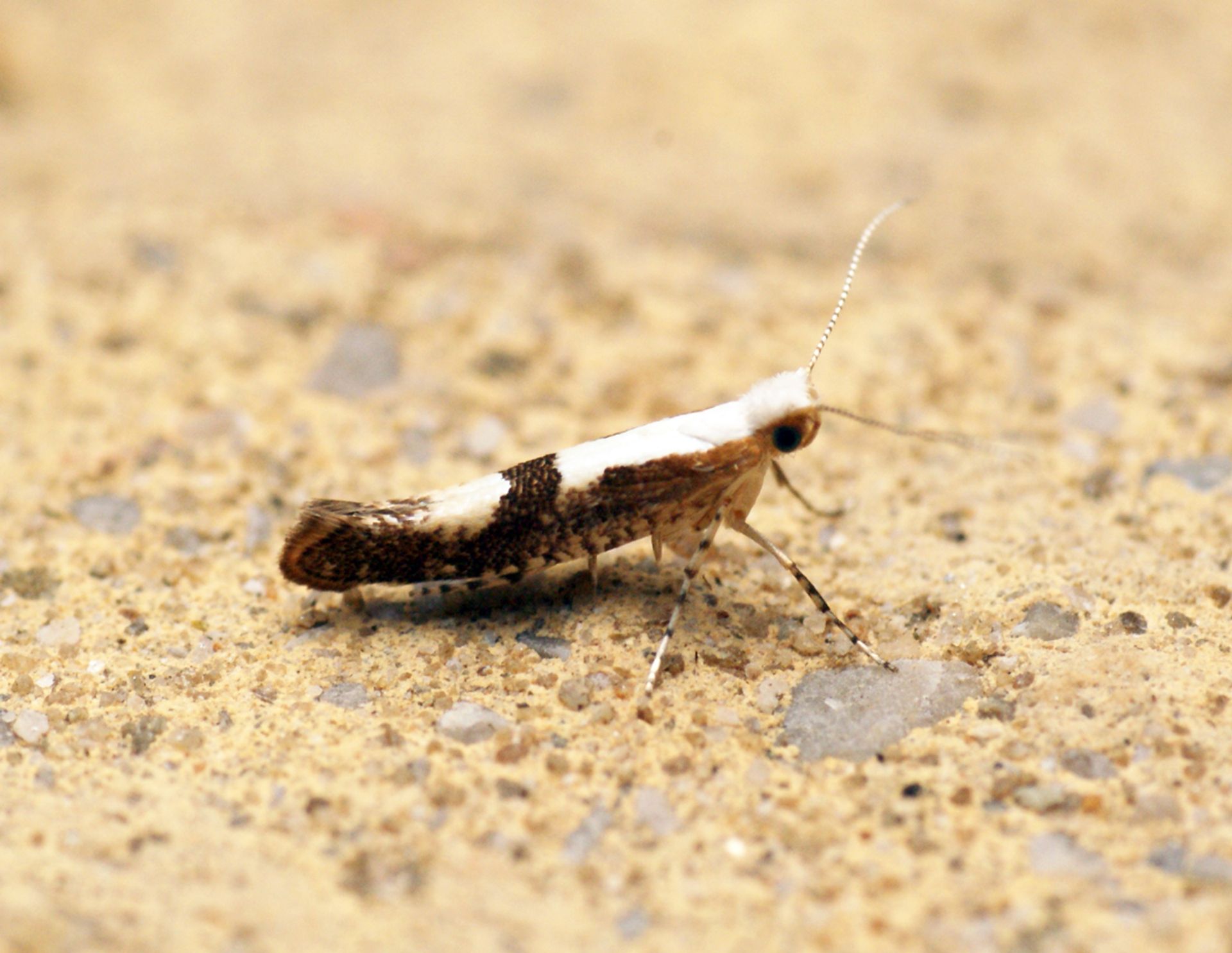
A small (wingspan 10–14 mm) native to the Northern Hemisphere, recognized as a significant pest of apple orchards in Scandinavia. are active from May to July. The species exhibits a specialized ecological relationship with rowan (Sorbus aucuparia), its primary , but switches to apple (Malus domestica) during years of poor rowan fruiting—a phenomenon linked to volatile-mediated host finding .
Pronunciation
How to pronounce Argyresthia conjugella: /ˌɑːr.dʒɪˈrɛs.θi.ə ˌkɒn.dʒʊˈɡɛl.lə/
These audio files are automatically generated. While they are not always 100% accurate, they are a good starting point.
Identification
Small size and distinctive wing pattern distinguish this from other Argyresthia . The combination of dark purplish-fuscous forewings with contrasting white markings ( streak, costal spots, strigulation) is characteristic. Similar species within Argyresthiidae may share metallic transverse banding patterns, but specific identification often requires examination of genitalia. The species is distinguished from congeneric miners of conifer needles by its association with rosaceous plants.
Images
Habitat
Forests and woodlands containing rowan (Sorbus aucuparia); apple orchards in regions where rowan and apple overlap. Occupies mixed conifer and broadleaf forest at elevations up to 7,000 feet where documented.
Distribution
Europe, Siberia, Central Asia, Japan, and North America. Specific distribution records include Norway, Finland, Sweden, Belgium, and New Mexico (USA).
Seasonality
on wing from May to July, with timing varying by location.
Diet
Larvae feed internally on developing seeds of rowan berries (Sorbus aucuparia) and apple fruits (Malus ).
Host Associations
- Sorbus aucuparia - primary Preferred ; larvae complete development in rowan seeds
- Malus domestica - secondary Used for oviposition during rowan masting failure years; larvae cannot complete development
Life Cycle
Larvae develop as seed within fruits, feeding internally on seeds. occurs within the fruit or after . emerge in spring to early summer. Some individuals may exhibit prolonged , though this is less pronounced than in associated .
Behavior
Females locate plants using olfactory cues, specifically responding to volatile compounds including 2-phenyl ethanol, methyl salicylate, and decanal from rowan. Attraction to synthetic blends has been demonstrated in field conditions. Males are attracted to female (Z)-11-hexadecenyl acetate; addition of (Z)-11-hexadecen-1-ol strongly inhibits male attraction. Host-switching from rowan to apple is triggered by volatile cues common to both plants, though apple volatiles are suboptimal attractants.
Ecological Role
seed of rowan. Acts as a periodic pest in apple orchards, causing fruit damage through larval tunneling. Serves as for at least seven of parasitic Hymenoptera in Norway.
Human Relevance
Economic pest of apple in Scandinavia, capable of destroying entire crops during years of poor rowan fruiting. Monitoring programs use synthetic lures to detect orchard invasion and reduce preventive applications.
Similar Taxa
- Other Argyresthia speciesMany congeneric are similar in size and wing pattern; most are conifer needle miners rather than rosaceous fruit feeders, and lack the specific dark purplish-fuscous forewing coloration with white streak
- Ypsolophidae/PlutellidaeSimilar micro- size range (6–13 mm) but distinguished by forward-projecting, often banded and different wing posture; larvae make loose silk webs rather than mining seeds
More Details
Masting and Host Switching
Rowan exhibits large- synchronous fluctuation in seed production (masting) every 2–4 years. During failure years, A. conjugella females oviposit on apple despite evolutionary association with rowan. This switch is mediated by shared volatile compounds rather than optimal host recognition.
Pheromone Biology
The system shows precise ratio sensitivity: (Z)-11-hexadecenyl acetate alone is highly attractive to males, but 1% addition of the corresponding alcohol completely suppresses attraction. This has practical implications for lure .
Diapause Characteristics
Prolonged occurs in this but is less pronounced than in the co-occurring seed Megastigmus brevicaudis. Some individuals delay up to five years, an to variable fruit availability.
Sources and further reading
- BugGuide
- Wikipedia
- GBIF taxonomy match
- iNaturalist taxon
- NCBI Taxonomy
- Catalogue of Life
- Bug Eric: New Mexico Night Bugs
- Sex pheromone of apple fruit moth Argyresthia conjugella (Lepidoptera: Argyresthiidae)
- Plant volatiles mediate attraction to host and non‐host plant in apple fruit moth, Argyresthia conjugella
- Discrepancy in laboratory and field attraction of apple fruit moth Argyresthia conjugella to host plant volatiles
- Studies on the apple fruit moth,Argyresthia conjugellaZeller (Yponomeutidae: Lepidoptera): Identification, distribution and extent of damage in India
- Distribution and Prolonged Diapause of the Rowan Seed Predators Argyresthia conjugella (Lepidoptera: Yponomeutidae) and Megastigmus brevicaudis (Hymenoptera: Torymidae) and their Parasitoids in Norway