Syndemis afflictana
(Walker, 1863)
gray leafroller, dead leaf roller, black-and-gray banded leafroller, Gray Leafroller Moth
Syndemis afflictana is a small tortricid found across northern North America, with disjunct in Florida and montane western regions. The inhabits coniferous forests and is commonly known by several names referencing its leaf-rolling and gray coloration. are active during warmer months and can be identified by their moderate size and banded wing pattern.

Pronunciation
How to pronounce Syndemis afflictana: /sɪnˈdɛ.mɪs əˌflɪkˈtaː.nə/
These audio files are automatically generated. While they are not always 100% accurate, they are a good starting point.
Identification
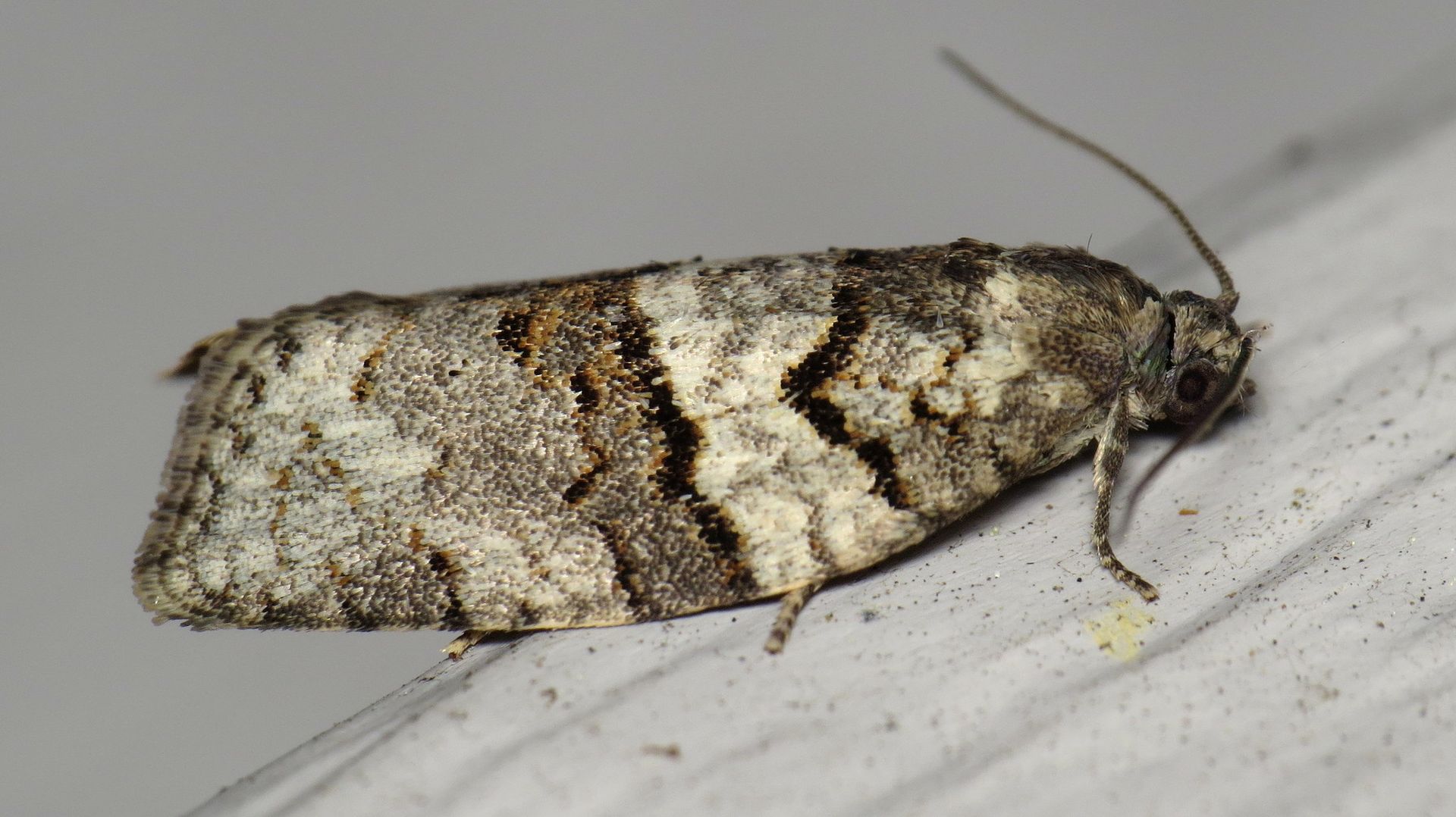
Moderate size for the (18–23 mm wingspan) distinguishes it from smaller tortricids. The gray and black banded forewing pattern separates it from uniformly colored and many other leafroller . Disjunct Florida may require geographic context for accurate identification.
Images
Appearance
Small with wingspan of 18–23 mm. Forewings display gray coloration with darker banding pattern, consistent with the 'black-and-gray banded leafroller'. Overall appearance is muted and cryptic, typical of many Tortricidae .
Habitat
Coniferous forests. Western occur in montane extending to California.
Distribution
North America: southern Canada (Alberta, Manitoba, Saskatchewan, Vermont), northern United States, and disjunctly in Florida. Western range extends south through mountainous regions to California.
Similar Taxa
- Other Syndemis species may share similar size and general ; S. afflictana distinguished by specific gray and black banded pattern and geographic range
- Other Tortricidae leafrollersMany tortricids exhibit leaf-rolling ; identification to level requires examination of wing pattern and genitalia
More Details
Taxonomic history
Originally described as Sciaphila afflictana by Walker in 1863 before transfer to Syndemis
Population structure
Disjunct distribution with main northern range and isolated Florida suggests possible cryptic diversity or historical range fragmentation