
Lozotaenia rindgei
Obraztsov, 1962
Lozotaenia rindgei is a small tortricid described by Obraztsov in 1962. It occurs across a broad North American range spanning from the Yukon and British Columbia south to Oregon, Wyoming, and Washington, with an isolated eastern in North Carolina. The is active during summer months.
Pronunciation
How to pronounce Lozotaenia rindgei: /loʊzoʊˈteɪniə ˈrɪndʒi/
These audio files are automatically generated. While they are not always 100% accurate, they are a good starting point.
Identification
Can be distinguished from other Lozotaenia by geographic range and, where overlapping, likely requires examination of genitalia or other subtle morphological features. The combination of small size (21–22 mm wingspan) and summer period may help separate it from some .
Images
Appearance
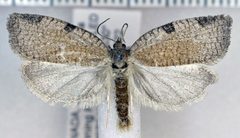
Wingspan approximately 21–22 mm. As a member of Tortricidae, likely possess the characteristic bell-shaped resting posture with wings folded roof-like over the body. Specific coloration and pattern details are not documented in available sources.
Distribution
North America: Yukon, British Columbia, Oregon, Wyoming, Washington, and North Carolina. The disjunct distribution suggests possible specialization or under-sampling in intervening regions.
Seasonality
have been recorded on wing from late June to August.
Similar Taxa
- Other Lozotaenia speciesSimilar size and general tortricid ; accurate identification typically requires examination of structural characters.
More Details
Taxonomic history
Described by Nikolay Obraztsov in 1962, a in Tortricidae . The specific epithet 'rindgei' likely honors an entomologist, though the namesake is not documented in available sources.
Distribution pattern
The presence of in both western North America (Yukon to Oregon/Wyoming) and eastern North Carolina represents a notable disjunction. This pattern is uncommon among tortricid moths and may indicate either a broader historical range, long-distance , or cryptic status requiring further investigation.