
Episimus argutana
(Clemens, 1860)
Sumac Leaftier Moth
Episimus argutana, commonly known as the Sumac Leaftier , is a of tortricid moth in the Tortricidae. The refers to the larval habit of tying leaves together with silk. The species is known from parts of eastern North America.


Pronunciation
How to pronounce Episimus argutana: //ɛˈpɪsɪmʊs arɡuˈtaːna//
These audio files are automatically generated. While they are not always 100% accurate, they are a good starting point.
Identification
Distinguished from similar small tortricids by genitalia ; external features alone are insufficient for reliable identification. The specific epithet "argutana" and association with sumac (Rhus) plants may aid field recognition where sumac is present and other similar are absent. Confirmation requires dissection or molecular analysis.
Images
Appearance
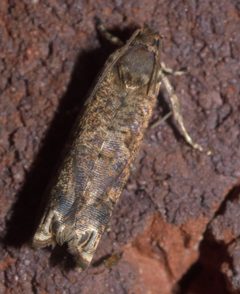
are small with wingspans approximately 12-15 mm. Forewings are narrow, somewhat elongate, with variable brown and gray mottled patterning. Hindwings are paler gray. The lacks prominent diagnostic wing markings and generally resembles other small Olethreutinae in overall appearance.
Habitat
Associated with sumac (Rhus) plants, occurring in open woodlands, forest edges, old fields, and disturbed areas where sumac grows.
Distribution
Recorded from Manitoba, Canada and Vermont, United States. Likely more widespread in eastern North America where suitable plants occur.
Diet
Larvae feed on sumac (Rhus ). Specific feeding habits include tying leaves together with silk and feeding within the tied leaf structure.
Host Associations
- Rhus - larval plantsumac
Behavior
Larvae are known for the distinctive of tying sumac leaves together with silk, creating a shelter within which they feed. This leaf-tying behavior is the source of the "Sumac Leaftier."
Ecological Role
Herbivore on sumac; larval leaf-tying creates minor localized damage to plants. Specific ecological impacts are not well documented.
Human Relevance
No significant economic or medical importance. Occasionally noted by naturalists due to the distinctive larval and readily observed plant association.
Similar Taxa
- Other Episimus species members are morphologically similar and require genitalia examination or plant association for reliable separation; E. argutana is specifically associated with sumac.
- Other small OlethreutinaeMany small tortricid moths share similar size and nondescript brown-gray coloration; accurate identification requires examination.
More Details
Taxonomic note
Originally described by Clemens in 1860. The has been historically placed in various tortricid before current classification in Episimus.