
Episimus
Walsingham, 1892
Species Guides
7- Episimus argutana(Sumac Leaftier Moth)
- Episimus augmentana
- Episimus kimballi
- Episimus lagunculariae
- Episimus nesiotes
- Episimus transferrana
- Episimus tyrius(Maple Tip Borer Moth)
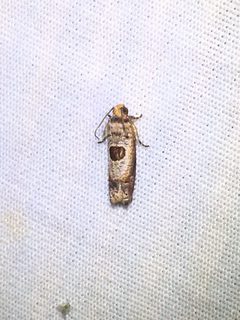
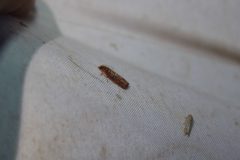
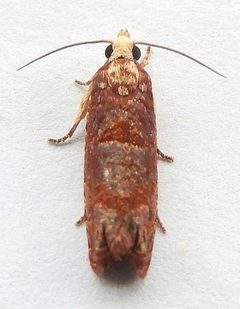
Episimus is a of tortricid moths in the Olethreutinae, established by Walsingham in 1892. The genus contains approximately 40 described distributed primarily in the Neotropical region, with some species ranging into North America. At least one species, E. unguiculus (syn. E. utilis), has been extensively studied as a candidate agent for the Brazilian peppertree (Schinus terebinthifolius) in Florida. The genus was taxonomically revised in 2008, with twelve new species described from the Neotropics and the synonymization of Episimoides.
Pronunciation
How to pronounce Episimus: /ɛˈpisɪmʊs/
These audio files are automatically generated. While they are not always 100% accurate, they are a good starting point.
Images
Habitat
Neotropical forests and associated ; at least one (E. unguiculus) is associated with Brazilian peppertree in disturbed sites and coastal mangrove forests. Laboratory studies indicate optimal performance occurs in low-salinity, high- conditions.
Distribution
Primarily Neotropical, with records from Mexico through Central America, the Caribbean (Greater Antilles including Cuba, Jamaica, Puerto Rico), and South America (Colombia, Ecuador, Peru, Bolivia, Venezuela, Trinidad). Specific localities include Rica, Panama, Guatemala, and Honduras. North American records include Vermont and Florida (where E. unguiculus has been introduced as a biocontrol candidate).
Diet
Known associations are limited. E. unguiculus is a herbivore on Brazilian peppertree (Schinus terebinthifolius, Anacardiaceae). Host plants for other in the are largely undocumented.
Host Associations
- Schinus terebinthifolius - herbivoreBrazilian peppertree; sole known for E. unguiculus
Life Cycle
For E. unguiculus: development from to takes approximately 32 days on high-quality plants (freshwater, high nutrients) or 34 days on high-nutrient plants; slower development under saline or low-nutrient conditions. Egg hatch rate reaches 88% on high-nutrient hosts. details for other are unknown.
Ecological Role
E. unguiculus has been investigated as a agent for Brazilian peppertree in Florida, where the plant disrupts native in disturbed sites and coastal mangrove forests. The ecological roles of other Episimus are undocumented.
Human Relevance
E. unguiculus (under the synonym E. utilis) is a candidate agent for Brazilian peppertree, one of the most plants in Florida. Laboratory rearing methods have been established to support potential field release programs. No other in the have documented economic or applied significance.
Similar Taxa
- EpisimoidesSynonymized with Episimus by Razowski & Becker in 2008; previously treated as separate based on Afrotropical distribution of E. erythraea, now transferred to Episimus
More Details
Taxonomic History
The was revised in 2008 (Razowski & Becker), describing twelve new from the Neotropics and synonymizing Episimoides Diakonoff, 1957. The type species is E. nesiotes Walsingham, 1897.
Biological Knowledge Gaps
associations and natural history are documented only for E. unguiculus. Heppner (1994) noted that biological knowledge for the was largely lacking, and this remains true for most .
Sources and further reading
- BugGuide
- Wikipedia
- GBIF taxonomy match
- iNaturalist taxon
- NCBI Taxonomy
- Catalogue of Life
- Systematics and Faunistics of Neotropical Olethreutini, 2: Episimus Walsingham, 1892 (Lepidoptera: Tortricidae)
- Influence of host-plant quality on the performance of Episimus unguiculus, a candidate biological control agent of Brazilian peppertree in Florida
- Biology and Laboratory Rearing ofEpisimus utilis(Lepidoptera: Tortricidae), a Candidate for Classical Biological Control of Brazilian Peppertree (Anacardiaceae) in Florida
- Temperature-Dependent Development and Potential Distribution ofEpisimus utilis(Lepidoptera: Tortricidae), a Candidate Biological Control Agent of Brazilian Peppertree (Sapindales: Anacardiaceae) in Florida
- Temperature-Dependent Development and Potential Distribution of <I>Episimus utilis</I> (Lepidoptera: Tortricidae), a Candidate Biological Control Agent of Brazilian Peppertree (Sapindales: Anacardiaceae) in Florida