
Apotomis funerea
(Meyrick, 1920)
Funereal Apotomis Moth
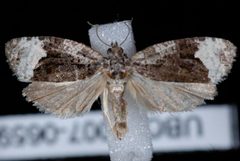
Apotomis funerea is a of tortricid in the Tortricidae, Olethreutinae. Described by Edward Meyrick in 1920 from a basionym of Argyroploce funerea, this species occurs in and temperate regions of North America. The "Funereal Apotomis Moth" reflects its dark, somber coloration. Like other members of Apotomis, it is associated with coniferous or mixed forest where larval plants occur.
Pronunciation
How to pronounce Apotomis funerea: /æˈpɒtəˌmɪs fjʊˈnɪəriə/
These audio files are automatically generated. While they are not always 100% accurate, they are a good starting point.
Identification
Members of Apotomis are small to medium-sized tortricid moths with relatively broad wings and distinctive genitalia that separate them from superficially similar Olethreutinae. Apotomis funerea specifically can be distinguished by its dark, muted coloration consistent with its epithet "funerea" (funereal). Accurate identification to species level requires examination of genitalia or molecular analysis, as external among Apotomis species can be subtle and overlapping.
Images
Habitat
and temperate forest , particularly coniferous and mixed woodlands. The Apotomis is generally associated with habitats supporting larval plants in Pinaceae and other conifer .
Distribution
North America: recorded from Alberta, Manitoba, and Saskatchewan in Canada, and Vermont in the United States. Distribution appears centered in the and north-temperate regions of the continent.
Host Associations
- Pinaceae - larval -level association; specific records for A. funerea not documented
Similar Taxa
- Other Apotomis speciesExternal overlaps significantly; genitalia examination required for definitive separation
- Olethreutini gen. spp.Similar size, wing shape, and resting posture; Apotomis distinguished by specific genitalic and wing pattern characteristics
More Details
Nomenclatural note
Originally described as Argyroploce funerea by Meyrick in 1920; transferred to Apotomis based on revised generic concepts in Tortricidae.
Research status
Like many North American Apotomis , detailed biological and ecological data remain limited; most information is derived from taxonomic revisions and museum collections rather than field studies.