
Talponia plummeriana
(Busck, 1906)
speckled talponia moth, pawpaw peduncle borer
Talponia plummeriana is a small tortricid native to the southeastern United States, commonly known as the pawpaw peduncle borer due to its specialized larval feeding on pawpaw (Asimina) plants. The is notable for its ability to tolerate annonacin, a toxic compound found in pawpaws that deters most other insects. Larval boring into flower peduncles can cause significant fruit yield reduction, making this species economically relevant to pawpaw .
Pronunciation
How to pronounce Talponia plummeriana: //tælˈpoʊniə ˌplʌməˈriːænə//
These audio files are automatically generated. While they are not always 100% accurate, they are a good starting point.
Identification
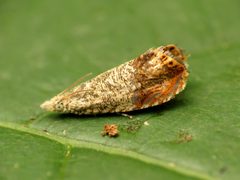
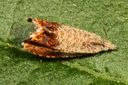
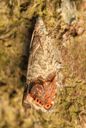
Distinguished from other small tortricids by the combination of small size (9–10 mm wingspan) and distinctive color pattern: powdery gray and basal forewing contrasting with purplish brown hindwing and outer forewing. Association with pawpaw plants provides additional diagnostic context. Specific distinguishing features from congeneric not documented in available sources.
Images
Appearance
Small with wingspan of 9–10 mm. have powdery gray coloration on and basal half of forewing; hindwing and outer half of forewing are purplish brown. No specific larval description provided in sources.
Habitat
Found throughout the native range of pawpaw (Asimina ), which occurs in moist, shaded understory of deciduous forests in the southeastern United States. Specific microhabitat requirements beyond plant presence not documented.
Distribution
Native to southeastern United States. First described from Plummers Island, Maryland. Occurs wherever pawpaw (Asimina triloba and related ) grows naturally.
Diet
Larvae feed on Asimina , particularly Asimina triloba (common pawpaw). Feeding occurs in flower peduncles, with occasional observation of fruit boring. diet not documented.
Host Associations
- Asimina triloba - larval food plantprimary ; larvae bore into flower peduncles
- Asimina - larval food plant-level association; multiple utilized
Life Cycle
Larval stage bores into pawpaw flower peduncles, causing flower drop. Specific details regarding placement, site, number of , and stage not documented in available sources.
Behavior
Larvae bore into peduncles of pawpaw flowers, causing affected flowers to drop. Occasionally observed burrowing directly into pawpaw fruit. Larvae are consumed by insectivorous birds including the golden-winged warbler (Vermivora chrysoptera).
Ecological Role
Specialized herbivore of pawpaw; one of few insects capable of detoxifying annonacin, allowing exploitation of a chemically defended plant. Serves as prey for insectivorous birds. Flower damage reduces fruit set, potentially influencing pawpaw .
Human Relevance
Pest of pawpaw ; larval feeding on flower peduncles reduces fruit yield. The "pawpaw peduncle borer" reflects its agricultural significance.
Similar Taxa
- Other TortricidaeSimilar small size and general ; distinguished by association with pawpaw and specific color pattern of powdery gray basal forewing with purplish brown portions
More Details
Toxin tolerance
One of few known to survive elevated levels of annonacin, a neurotoxic acetogenin found in pawpaw plants (Annonaceae). This biochemical enables specialized feeding on an otherwise well-defended .
Type locality
epithet and reference Plummers Island, Maryland, where the was collected.