
Ecdytolopha
Zeller, 1875
Species Guides
5- Ecdytolopha coloradana
- Ecdytolopha insiticiana(Locust Twig Borer)
- Ecdytolopha mana(Bicolored Ecdytolopha Moth)
- Ecdytolopha nigrita
- Ecdytolopha occidentana
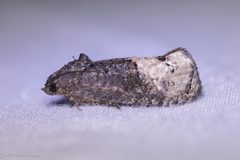
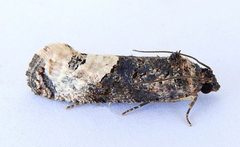
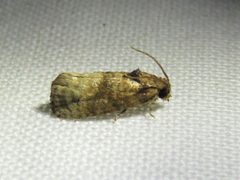
Ecdytolopha is a of tortricid moths in the Olethreutinae, established by Zeller in 1875. The genus includes approximately 11 described distributed in the Americas. Several species are economically significant agricultural pests, particularly of fruit and nut crops. Notable pest species include Ecdytolopha aurantiana (citrus fruit borer), Ecdytolopha insiticiana (locust twig borer), and Ecdytolopha torticornis (macadamia nut borer).
Pronunciation
How to pronounce Ecdytolopha: /ˌɛkdaɪˈtɒləfə/
These audio files are automatically generated. While they are not always 100% accurate, they are a good starting point.
Images
Habitat
in this occupy diverse corresponding to their plants. Ecdytolopha aurantiana occurs in citrus groves, resting on leaves in the lower and middle crown during daytime and moving to the upper crown after sunset. Ecdytolopha insiticiana inhabits areas where its leguminous host trees grow, including black locust, honey locust, and related species. Ecdytolopha torticornis has been recorded in macadamia orchards in Rica.
Distribution
The is distributed in the Americas. records include: Brazil (São Paulo), Rica, the United States (Vermont, Colorado), and Mexico (Sinaloa). Specific distribution varies by species; Ecdytolopha aurantiana is known from Brazil, Ecdytolopha insiticiana from the United States, and several species described by Adamski & Brown in 2001 from Mexico and the southwestern United States.
Host Associations
- Citrus - pestEcdytolopha aurantiana; larvae bore into fruit
- Sapindus saponaria - pestEcdytolopha aurantianum; new record
- Robinia pseudoacacia (black locust) - pestEcdytolopha insiticiana; larvae bore into twigs
- Gleditsia triacanthos (honey locust) - pestEcdytolopha insiticiana
- Laburnum anagyroides - pestEcdytolopha insiticiana
- Cercis canadensis (redbud) - pestEcdytolopha insiticiana
- Cassia marilandica - pestEcdytolopha insiticiana
- Wisteria sp. - pestEcdytolopha insiticiana
- Cytisus scoparius (Scotch broom) - pestEcdytolopha insiticiana
- Sophora japonica - pestEcdytolopha insiticiana
- Cladrastis lutea - pestEcdytolopha insiticiana
- Maackia amurensis - pestEcdytolopha insiticiana
- Gymnocladus dioicus (Kentucky coffee tree) - pestEcdytolopha insiticiana
- Colutea arborescens - pestEcdytolopha insiticiana
- Caragana arborescens - pestEcdytolopha insiticiana
- Genista tinctoria - pestEcdytolopha insiticiana
- Lespedeza bicolor - pestEcdytolopha insiticiana
- Lespedeza thunbergii - pestEcdytolopha insiticiana
- Macadamia - pestEcdytolopha torticornis; nut borer
Life Cycle
For Ecdytolopha insiticiana, larvae bore into twigs of plants and develop through five larval instars, determined by capsule measurements and width. First instar larvae possess a chitinized plate on the surface of the first thoracic segment.
Behavior
Ecdytolopha aurantiana exhibits bimodal activity with peaks at dawn and dusk. rest on leaves in the lower and middle crown during daytime when temperatures are highest and humidity lowest, then rapidly move to the upper crown after sunset. Mating occurs exclusively in the upper crown from 6:00-9:00 PM, peaking between 7:00-8:00 PM. Males are attracted to virgin females or female extracts via long-range . Short-range courtship involves males exposing hairpencils and vibrating wings when within 1-2 cm of females; females contact the male body before copulation. Mean copulation duration is 1 hour 40 minutes.
Ecological Role
Several function as agricultural pests. Ecdytolopha insiticiana larvae act as on leguminous trees. Ecdytolopha aurantiana and Ecdytolopha torticornis are fruit and nut borers in commercial orchards. Weed management practices may influence pest ; macadamia husk mulch has been observed to increase Ecdytolopha torticornis numbers, possibly by concentrating attractive odors or disrupting natural enemy populations.
Human Relevance
Multiple are economically significant pests. Ecdytolopha aurantiana damages citrus fruit in Brazil. Ecdytolopha insiticiana causes twig damage to black locust, honey locust, and other ornamental and timber legumes in North America. Ecdytolopha torticornis is a nut borer in macadamia orchards in Rica. Management strategies include monitoring traps and modifying orchard floor management.
Sources and further reading
- BugGuide
- Wikipedia
- GBIF taxonomy match
- iNaturalist taxon
- NCBI Taxonomy
- Catalogue of Life
- Sexual Behavior and Diel Activity of Citrus Fruit Borer Ecdytolopha aurantiana
- Sapindus saponaria L. (Sapindaceae), a new host of Ecdytolopha aurantianum (Lima) (Lepidoptera: Tortricidae: Olethreutinae)
- Host Relationships and Determination of Larval Instars of the Locust Twig Borer Ecdytolopha insiticiana 2
- Efecto del manejo de las malezas en macadamia sobre la población del barrenador de la nuez Ecdytolopha torticornis Meyrick (Lep: Tortricidae).