
Strepsicrates
Meyrick, 1888
Species Guides
1- Strepsicrates smithiana(bayberry leaftier moth)
Strepsicrates is a of tortricid moths in the Olethreutinae, tribe Eucosmini, established by Meyrick in 1888. within this genus are distributed across multiple continents including Asia, Australia, the Americas, and Africa. Several species are economically significant as pests of forestry and agricultural crops, particularly those feeding on Eucalyptus, Cordia, and Myrica species. The genus has undergone taxonomic revision, with some species historically transferred between Strepsicrates and the related genus Stictea.
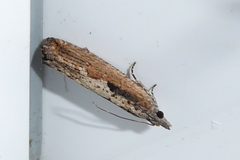
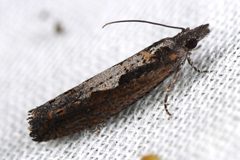
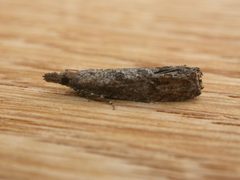
Identification
Distinguishing Strepsicrates from similar tortricid requires examination of genitalia and wing pattern characteristics. The genus has been subject to taxonomic confusion with Stictea, and -level identification relies on detailed morphological analysis. are small to medium-sized typical of the Olethreutinae, with variations in forewing pattern and coloration among species.
Images
Habitat
vary by : Strepsicrates rhothia occurs in agricultural and forest areas in India; Strepsicrates smithiana inhabits coastal desert valleys in northern Chile; Strepsicrates macropetana is associated with Eucalyptus plantations and nurseries. Multiple species have been documented in forestry nursery and plantation environments.
Distribution
Widespread distribution spanning Asia (India, China region), Australia, Africa (South Africa), and the Americas (Chile, Ecuador, Central America, southern United States, West Indies, Galapagos, Hawaii). Specific distribution varies considerably by : S. rhothia in central India; S. smithiana from Texas and Florida south to Chile, with introduced in Hawaii; S. macropetana in New Zealand and Australia.
Host Associations
- Eucalyptus - Multiple including S. macropetana; E. nitens, E. saligna, E. fastigata, and E. regnans confirmed as suitable
- Cordia myxa - Confirmed for S. rhothia in India
- Cordia dichotoma - Confirmed for S. rhothia in India
- Myrica pavonis - Confirmed for S. smithiana in Chile; new host record
- Myrtaceae - -level association for S. smithiana
- Rhodomyrtus tomentosa - for undetermined Strepsicrates evaluated for
Life Cycle
Complete documented for S. rhothia: laid singly on leaf upper surface, larva with five instars (12-16 days), pupa in silken cocoon on leaf or in soil (7-10 days), lifespan 5-7 days. Total time 25-35 days with multiple generations annually. Leaf-tying observed in S. smithiana larvae, with concealed among silk-tied leaves.
Behavior
Larvae exhibit leaf-tying and leaf-folding : S. rhothia larvae scrape leaf and create holes, with later instars folding leaves and feeding from within; S. smithiana larvae tie leaves with silk. S. rhothia emerge in morning hours and mate in evening hours. Females lay 80-120 during lifespan.
Ecological Role
Several function as defoliators and pests of economically important plants. S. macropetana is a significant pest in Eucalyptus plantations and nurseries. S. rhothia causes damage to Cordia species with potential economic impact on fruit-bearing . One undetermined species was evaluated for of Rhodomyrtus tomentosa but rejected due to broad host range.
Human Relevance
Economic impact as forestry and agricultural pests, particularly S. macropetana on Eucalyptus plantations in New Zealand and Australia, and S. smithiana on Myrica . Taxonomic instability with species transferred between Strepsicrates and Stictea complicates identification and management. Evaluated for potential but rejected for specific applications due to breadth.
Similar Taxa
- SticteaHistorical taxonomic confusion with Strepsicrates; have been transferred between these , requiring careful morphological examination for correct assignment
More Details
Taxonomic History
The has experienced taxonomic revision with moved between Strepsicrates and Stictea, reflecting ongoing challenges in olethreutine classification
Biological Control Evaluation
At least one Strepsicrates was evaluated as a potential agent for Rhodomyrtus tomentosa but deemed unsuitable due to excessively broad range
Sources and further reading
- BugGuide
- Wikipedia
- GBIF taxonomy match
- iNaturalist taxon
- NCBI Taxonomy
- Catalogue of Life
- Life history and abundance of the eucalyptus leafroller (<i>Strepsicrates macropetana</i>)
- Strepsicrates smithiana Walsingham (Lepidoptera, Tortricidae): first record from Chile and a newly documented host plant
- Observations on the Life History and Chaetotaxy of <i>Strepsicrates rhothia</i> (Meyrick) (Microlepidoptera : Tortricidae : Eucosmini)
- Host suitability of some eucalypts for development of the Eucalyptus leafroller (<i>Strepsicrates macropetana</i>)
- Host range of the defoliatorStrepsicratessp. is too broad for biological control of the invasive weedRhodomyrtus tomentosa
- Exploring the diversity of leafrollers (Lepidoptera: Tortricidae) associated with eucalypts in South African forestry nurseries and plantations, with a new report of Strepsicrates sp.