Notocelia rosaecolana
(Doubleday, 1850)
Doubleday's Notocelia Moth
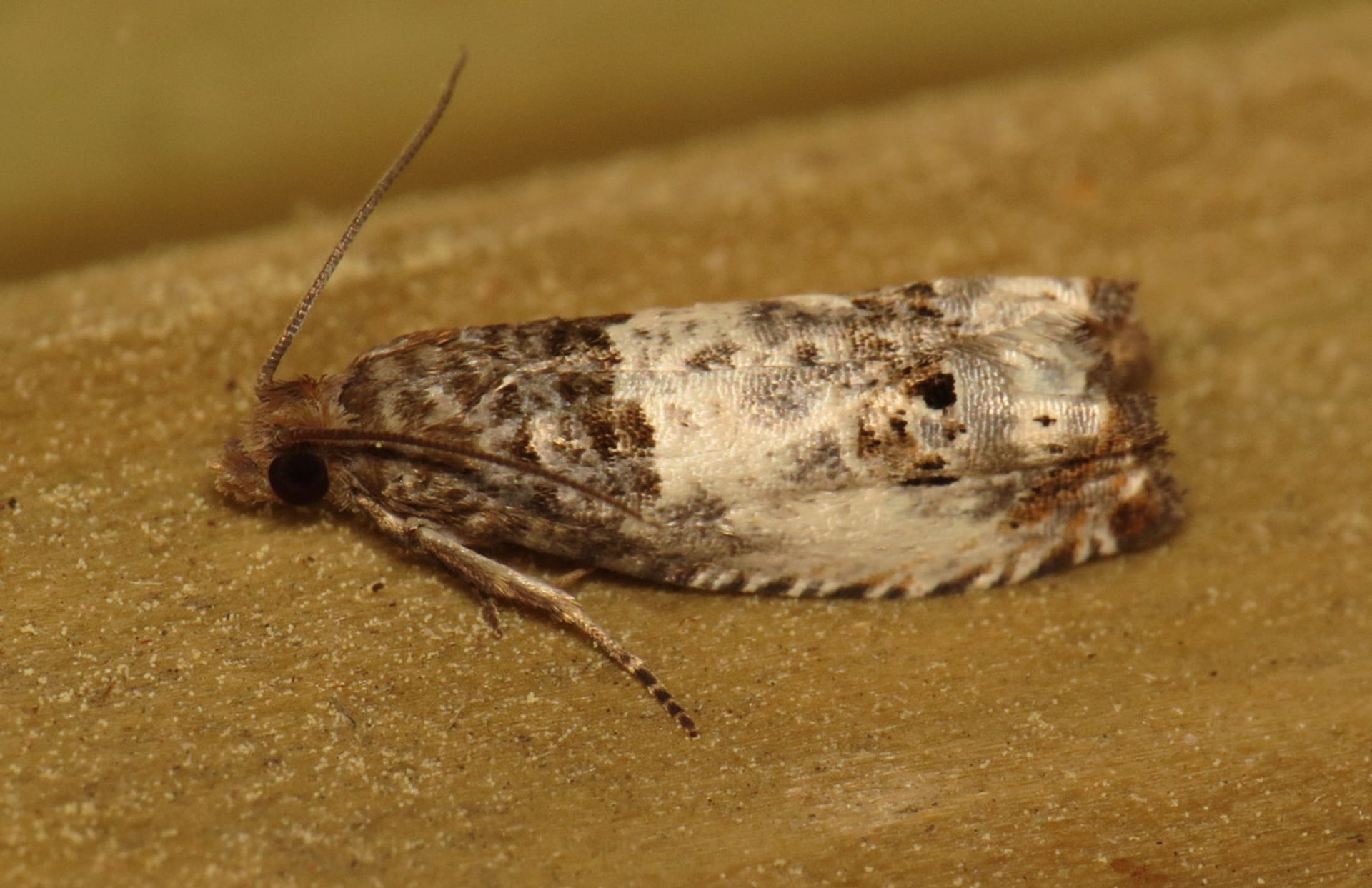
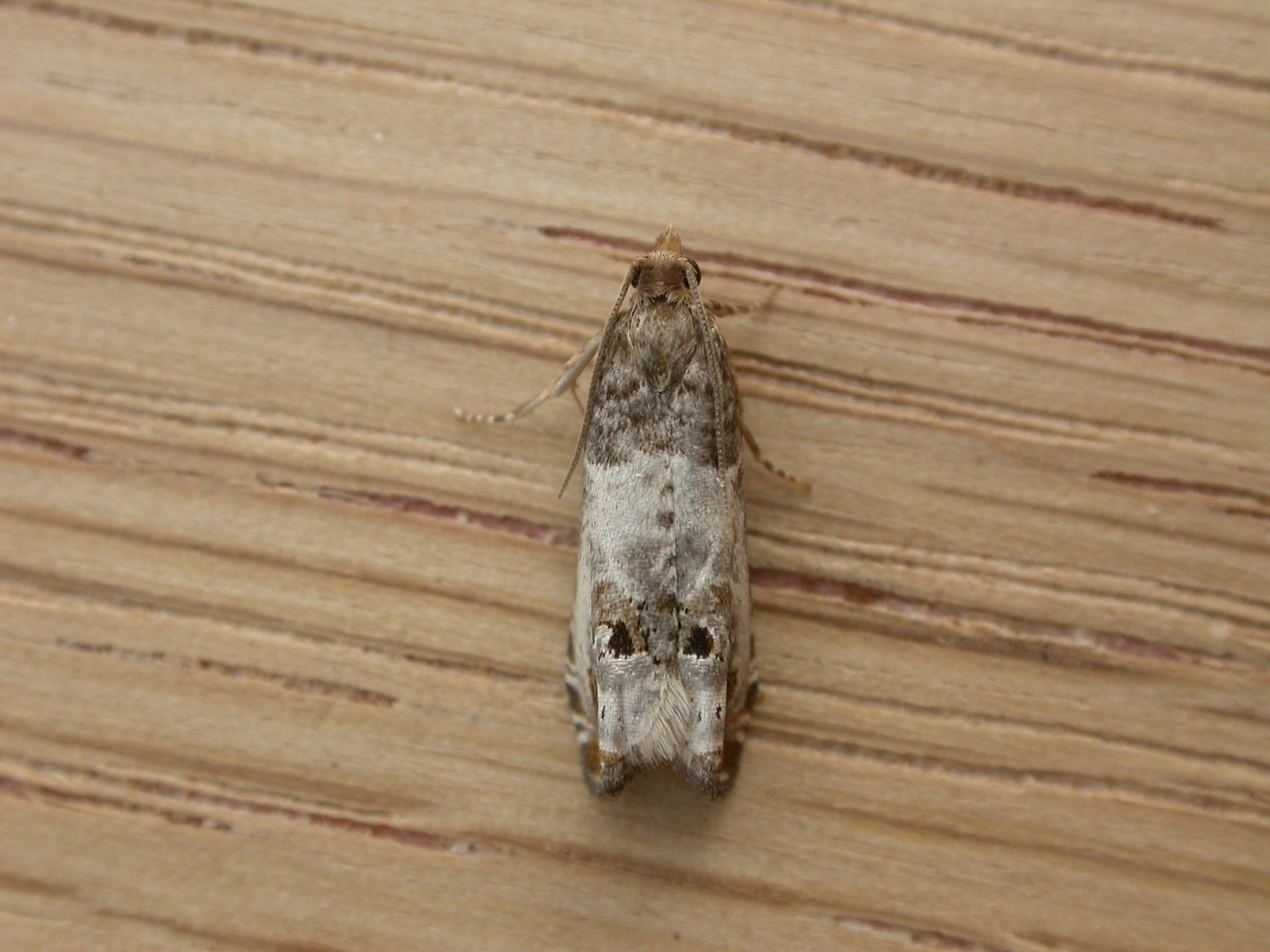
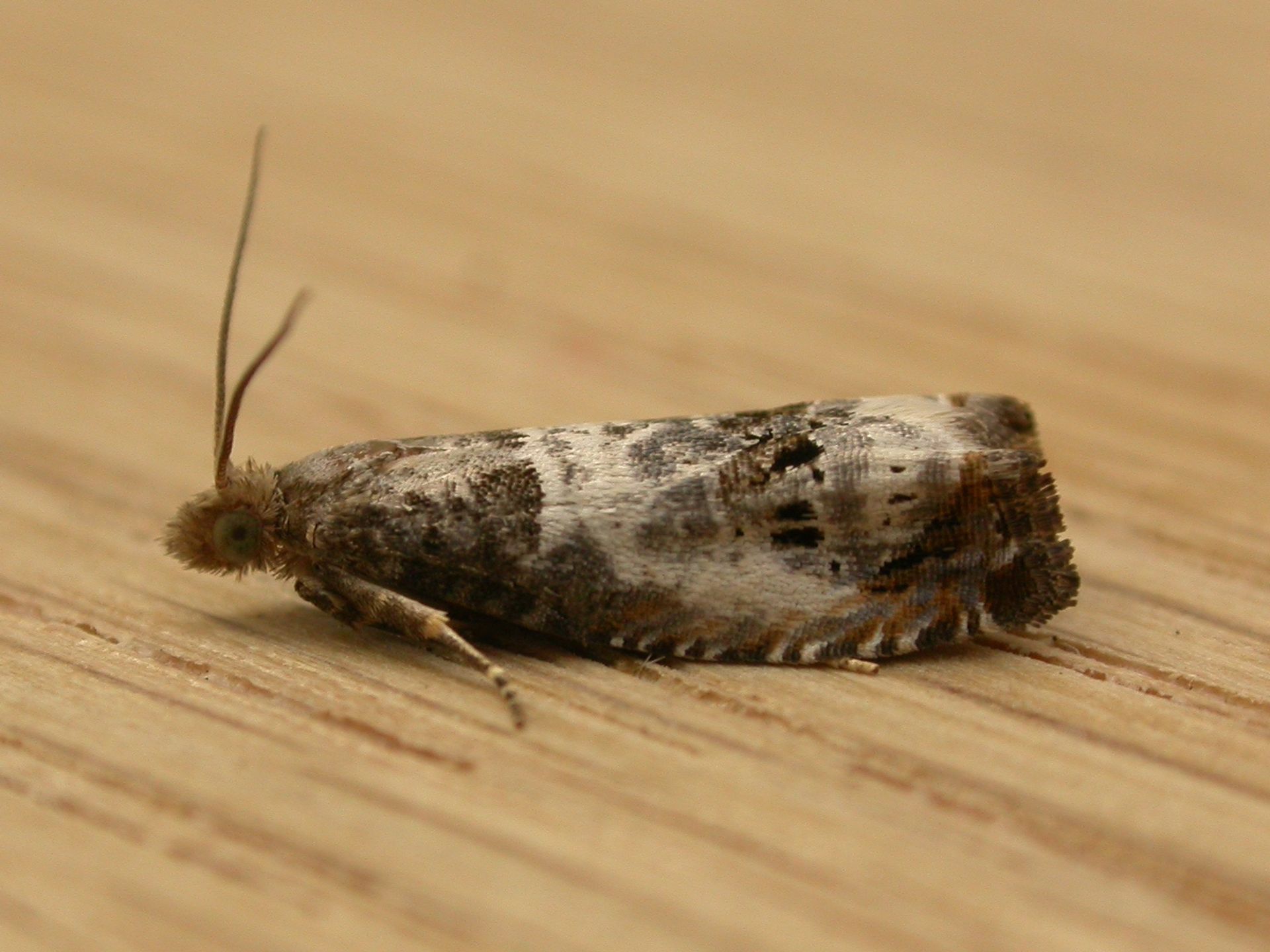
A small tortricid with a wingspan of 15–20 mm, distributed across the Palearctic from Europe through Central Asia to East Asia. fly from late May to August in western Europe. Larvae feed on various Rosa . The species closely resembles Notocelia trimaculana and Notocelia roborana, requiring careful examination for identification.
Pronunciation
How to pronounce Notocelia rosaecolana: //ˌnɒtəˈsiːliə roʊˌziːkoʊˈlɑːnə//
These audio files are automatically generated. While they are not always 100% accurate, they are a good starting point.
Identification
Distinguished from similar Notocelia by forewing pattern: the combination of a dark fuscous basal patch with rounded edge, fuscous lower central fascia spotted with black, and leaden-metallic ocellus with three to four black dots. Costal strigulation and streaking also aid separation. Closest superficial resemblance to N. trimaculana and N. roborana; genitalia examination may be required for definitive identification.
Images
Distribution
: Europe; Russia; Central Asia; Iran; Mongolia; Korea; Japan; China (Beijing, Hebei, Liaoning, Jilin, Heilongjiang, Fujian, Jiangxi, Henan, Hubei, Hunan, Sichuan, Guizhou, Shaanxi, Gansu).
Seasonality
on wing from late May to August in western Europe.
Diet
Larvae feed on Rosa multiflora, Rosa davurica, and Rosa rugosa.
Host Associations
- Rosa multiflora - larval foodplant
- Rosa davurica - larval foodplant
- Rosa rugosa - larval foodplant
Life Cycle
Larval stage feeds on rose . details not documented in available sources. from late May through August in western Europe.
Similar Taxa
- Notocelia trimaculanaClosely resembles N. rosaecolana in general appearance; forewing pattern similarities require careful examination to separate
- Notocelia roboranaClosely resembles N. rosaecolana in general appearance; forewing pattern similarities require careful examination to separate
More Details
Etymology
Specific epithet 'rosaecolana' refers to association with Rosa (rose) , from Latin 'rosa' + '-cola' (dweller/inhabitant) + '-ana' (suffix indicating connection).