
Epinotia radicana
(Heinrich, 1923)
Red-striped Needleworm Moth
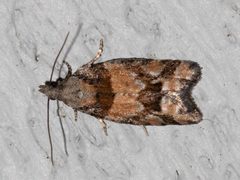
Epinotia radicana is a small tortricid known for its association with coniferous forests across northern North America. The is recognized by its referencing the reddish larval stripes and needle-feeding habits. It has been documented from western Canada through to the northeastern United States, with a tightly synchronized to the of its trees. The species is not considered a significant forest pest despite its widespread occurrence in spruce-fir .
Pronunciation
How to pronounce Epinotia radicana: /ˌɛpɪˈnoʊʃə ræˈdɪkənə/
These audio files are automatically generated. While they are not always 100% accurate, they are a good starting point.
Identification
have a wingspan of 12–15 mm. The can be distinguished from similar Epinotia species by a combination of size, wing pattern, and geographic distribution, though specific diagnostic features for field identification are not well documented in available sources.
Images
Habitat
Occurs in spruce-fir forests of North America, with highest abundance in coniferous forest .
Distribution
Western Canada (British Columbia, Alberta, Saskatchewan, Manitoba) and northeastern United States (Vermont). Records suggest a and montane distribution pattern associated with coniferous forest regions.
Seasonality
emerge in late summer and fall. overwinter on needles. Larvae feed from late May to late July. occurs in silken cocoons in ground litter.
Diet
Larvae feed on new foliage of coniferous trees. White spruce (Picea glauca) is the preferred . Larvae have been recorded on multiple Abies, Picea, Larix, Pinus, and Tsuga , as well as Juniperus, Pseudotsuga menziesii, and Thuja plicata.
Host Associations
- Abies balsamea - larval
- Abies concolor - larval
- Abies grandis - larval
- Abies lasiocarpa - larval
- Abies magnifica - larval
- Juniperus - larval
- Larix laricina - larval
- Larix lyallii - larval
- Larix occidentalis - larval
- Picea engelmanni - larval
- Picea glauca - preferred larval white spruce
- Picea mariana - larval
- Picea pungens - larval
- Picea rubens - larval
- Picea sitchensis - larval
- Pinus contorta - larval
- Pseudotsuga menziesii - larval
- Thuja plicata - larval
- Tsuga heterophylla - larval
Life Cycle
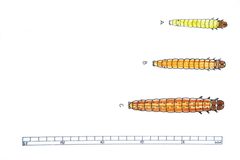
overwinter on needles. Larvae feed on new foliage from late May to late July, reaching approximately 9 mm at maturity. Full-grown larvae drop to the ground and pupate in silken cocoons in the litter layer. emerge in late summer and fall. Females lay eggs singly at the base of needles.
Behavior
Females lay singly at the base of needles. Larvae feed externally on new foliage. Mature larvae drop from trees to pupate in ground litter.
Ecological Role
A primary consumer in coniferous forest . Larval feeding on new foliage contributes to nutrient cycling, though the does not cause significant tree damage or forest health impacts.
Human Relevance
Not considered a serious forest pest; no records of significant despite common occurrence in spruce-fir forests. The has been used as a model organism in studies of lepidopteran susceptibility to Bacillus thuringiensis toxins.
Similar Taxa
- Epinotia aporemaCongeneric with similar ; distinguished by geographic distribution and associations
- Other Epinotia speciesRequire examination of genitalia or detailed wing pattern analysis for definitive identification; E. radicana distinguished by combination of size, distribution, and preferences