
Tineola
Herrich-Schäffer, 1853
clothes moths
Species Guides
1- Tineola bisselliella(webbing clothes moth)
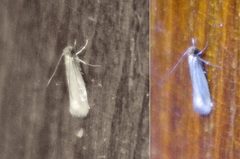
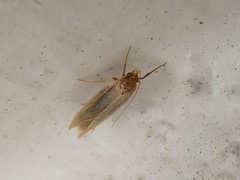
Tineola is a of small in the Tineidae containing two described , including the economically significant common (T. bisselliella). The genus is notable for larvae that possess specialized digestive capabilities enabling them to metabolize keratin, a protein found in hair, wool, feathers, and other animal-derived materials. These moths are , having evolved alongside humans and now rarely occurring outside human dwellings.
Pronunciation
How to pronounce Tineola: //taɪˈniːoʊlə//
These audio files are automatically generated. While they are not always 100% accurate, they are a good starting point.
Images
Habitat
Indoor environments associated with stored woolens, furs, feathers, hair, and other keratin-containing materials. Larvae construct silken webs or tubes for feeding and shelter. are attracted to dark, undisturbed storage areas and potential larval such as old rugs and furs.
Distribution
distribution in human dwellings; present wherever woolen goods and animal products are stored. Hypothesized to have originated in Africa and expanded globally via 19th century sailing ships. Documented from North America, South America, Europe, Africa, Asia, and Australia.
Diet
Keratin-based materials including wool, fur, feathers, hair, and other animal-derived proteinaceous substances. Larvae are facultative keratinophages, capable of digesting keratin when available and able to utilize fungus and other organic detritus as alternative food sources.
Life Cycle
Complete with , larva, pupa, and stages. Eggs are pearlescent and approximately 0.3 mm in diameter. Larvae are cream-colored, spin silk while feeding, and construct cocoons of silk mixed with substrate particles for . Adults are non-feeding with reduced or absent mouthparts, living only a few weeks for .
Behavior
Larvae spin silk webbing for protection while feeding. are light-averse, poor flyers that prefer to move by scurrying on foot. Females exhibit , with individuals observed mating up to 11 times in laboratory . Adults are attracted to the smell of woolens and potential larval . Larvae have been observed to chew through soft plastics and can metabolize their own water as a byproduct of keratin digestion.
Ecological Role
Decomposer of keratinous materials in anthropogenic environments. Classified as a with no significant documented role in natural outside human habitation.
Human Relevance
Major economic pest of stored textiles, natural history collections, and animal-derived materials. Causes up to $1 billion in damage annually in the United States alone. Rarely found outdoors due to dependence on human-created environments.
Similar Taxa
- TineaAlso in Tineidae with keratin-feeding larvae; Tinea pellionella (casemaking clothes moth) distinguished by larvae that construct portable silk tubes rather than stationary webbing
- MonopisTineidae with similar small size and indoor habits; differs in larval feeding preferences and
More Details
Physiological specializations
Larvae can metabolize toxic metals including arsenic, mercury, and lead. They tolerate temperatures from 5°F to 95°F for several days and can survive without external water sources.
Evolutionary history
Tineidae is an ancient lineage predating more recognizable . Tineola likely accompanied primate ancestors before human evolution, colonizing sleeping nests constructed from plant materials.
Reproduction
Laboratory studies document significant variation in between , with mechanisms preventing multiple mating differing according to male sex potentials.
Sources and further reading
- BugGuide
- Wikipedia
- GBIF taxonomy match
- iNaturalist taxon
- NCBI Taxonomy
- Catalogue of Life
- webbing clothes moth (Tineola bisselliella) adult - Entomology Today
- webbing clothes moth (Tineola bisselliella) adult - Entomology Today
- webbing clothes moth (Tineola bisselliella) larva - Entomology Today
- webbing clothes moth (Tineola bisselliella) larva - Entomology Today
- Tineola bisselliella Archives - Entomology Today
- In Defense of Clothes Moths, Marvels of Evolution
- An Outline of the Life History of the Clothes Moth, Tineola biselliella
- Studies on the Biology of the Webbing Clothes Moth (Tineola Bisselliella Hum.)
- Reproductive behavior of the webbing clothes moth (Tineola bisselliella): Polyandry and multiple mating with the same male
- Biology, behaviour and environmentally sustainable control of Tineola bisselliella (Hummel) (Lepidoptera: Tineidae)