
Tinea pallescentella
Stainton, 1851
Large Pale Clothes Moth
Tinea pallescentella is a small clothes moth in the Tineidae, commonly known as the large pale clothes moth. have a wingspan of 12–15 mm and are active year-round. The has a broad distribution spanning most of Europe (excluding the Iberian and most of the Balkan Peninsula), western North America, South America, and Australia. Larvae feed on keratinous animal matter including hair, wool, fur, and feathers.
Pronunciation
How to pronounce Tinea pallescentella: /ˈtɪniə pælˌɛsɛnˈtɛlə/
These audio files are automatically generated. While they are not always 100% accurate, they are a good starting point.
Identification
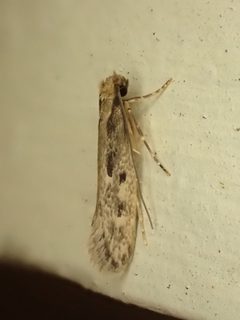
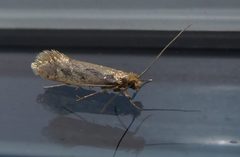
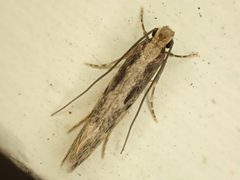
Distinguished from similar clothes moths by the combination of light greyish-ochreous forewings with distinct dark fuscous stigmata, particularly the elongate plical stigma forming a dash along the fold. The two indistinct whitish dots beyond the second discal stigma and the very pale grey hindwings are additional diagnostic features. The specific epithet 'pallescentella' refers to the pale coloration.
Images
Appearance
Small with wingspan 12–15 mm. light greyish ochreous, mixed with fuscous. Forewings light greyish-ochreous with fuscous mottling; base of and short basal dash dark fuscous; stigmata dark fuscous and elongate, with plical stigma forming an extended dash along the fold; two indistinct whitish dots beyond second discal; cloudy dark fuscous terminal spots present. Hindwings very pale grey.
Habitat
Indoor environments and human-associated spaces where keratinous materials are present; specific outdoor preferences not documented
Distribution
Most of Europe (absent from Iberian Peninsula and most of Balkan Peninsula); western North America (recorded from California); South America (including Argentina); Australia; also recorded from Falkland Islands
Seasonality
active year-round; no specific seasonal peak documented
Diet
Larvae feed on keratinous animal matter: hair, wool, fur, and feathers
Life Cycle
Complete with , larva, pupa, and stages. Specific details of egg, larval, and pupal stages not documented for this . Adults do not feed.
Behavior
are . Specific behavioral details beyond year-round activity not documented for this .
Ecological Role
Decomposer of keratinous animal material; facilitates nutrient cycling of otherwise recalcitrant organic matter
Human Relevance
Household pest of stored woolens, furs, and other keratin-containing materials. Larval feeding damages textiles and animal products.
Similar Taxa
- Tinea pellionellaCasemaking clothes moth; distinguished by larval of constructing portable silk cases and different wing pattern
- Tineola bisselliellaWebbing clothes moth; smaller size, more uniformly golden coloration, and different wing shape