
Niditinea fuscella
(Linnaeus, 1758)
brown-dotted clothes moth, European house moth
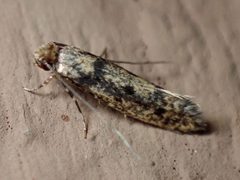
A small tineid with a wingspan of approximately 14 mm. display brown-grey forewings marked with three large blackish-brown dots and silvery-white hindwings with long-haired fringes. The is widespread across the western Palearctic and has been introduced to Australia and New Zealand. Despite its , it is rarely a significant pest of clothing.
Pronunciation
How to pronounce Niditinea fuscella: /nɪ.dɪˈtɪ.niː.ə fʊsˈkɛl.lə/
These audio files are automatically generated. While they are not always 100% accurate, they are a good starting point.
Identification
Distinguished from similar tineid moths by the combination of three prominent blackish-brown dots on each forewing, silvery-white hindwings with long-haired fringes, and a reddish-brown hair tuft on the . The overall dull brown-grey coloration and small size (14 mm wingspan) are consistent with the Niditinea.
Images
Habitat
Associated with bird nests, particularly those of domestic fowl (chicken), domestic pigeon, swallows, and woodpeckers. Also found in environments containing dry organic debris including discarded animal materials.
Distribution
Native to much of the western Palearctic, excluding outlying islands such as Iceland and cold northern regions like far northern Scotland. Introduced to Australia and New Zealand. Records from the Azores (Corvo, Faial, Flores, São Miguel, Terceira).
Seasonality
active from May to September, varying by location. Adults avoid bright daylight and are active primarily in late afternoon.
Diet
Larvae feed on dry animal and plant remains including shed feathers, , discarded wool and similar fabrics, dry peas, dried fruit, bran, dry rose flowers, dead beetles in cultures, and pigskin bookbindings.
Behavior
are photophobic, avoiding bright daylight and restricting activity to late afternoon hours.
Ecological Role
Decomposer of dry organic material, particularly in bird nest environments; contributes to nutrient cycling of keratinous and chitinous debris.
Human Relevance
Rarely a significant pest of clothing despite ; capable of damaging wool fabrics, dried foodstuffs, and bookbindings. More frequently encountered in association with bird nests than domestic settings.
Similar Taxa
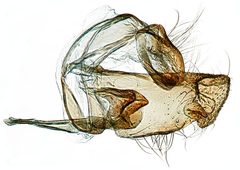
- Niditinea striolellaSimilar size and preferences; requires examination of forewing pattern and genitalia for definitive separation.
- Tinea pellionellaAnother clothes moth with overlapping distribution; distinguished by different forewing markings and lack of three prominent dots.
Misconceptions
The 'brown-dotted clothes moth' implies significant clothing damage, but the is rarely recorded as a textile pest and prefers bird nest .