
Erechthias minuscula
(Walsingham, 1897)
Caribbean Scavenger Moth, erechthias clothes moth
Erechthias minuscula is a small in the Tineidae, first described by Lord Walsingham in 1897. It has a remarkably broad geographic distribution spanning tropical and subtropical regions across multiple continents and oceanic islands. The is known to utilize a wide variety of plant materials as food sources, including living plants, fruits, and decaying vegetation.
Pronunciation
How to pronounce Erechthias minuscula: /ɛˈrɛkθiəs maɪˈnʌskjʊlə/
These audio files are automatically generated. While they are not always 100% accurate, they are a good starting point.
Identification
The extremely small size (forewings 3.5–4 mm) distinguishes this from most other . Definitive identification requires examination of genitalia or other microscopic features not described in general sources. It may be confused with other small Tineidae, particularly other Erechthias species, but specific distinguishing characters are not documented.
Images
Appearance
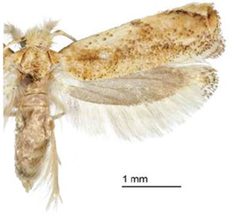
A small with forewing length of 3.5–4 mm. Specific wing pattern, coloration, and body details are not documented in available sources.
Habitat
Found in tropical and subtropical environments across a wide range of islands and continental regions. Specific microhabitat preferences are not documented, though the is associated with areas where its diverse plant food sources occur.
Distribution
Recorded from Africa, Sri Lanka, Java, Australia, the Caroline Islands, Fiji, Samoa, the Marquesas, the West Indies, Hawaii, Florida, and the Galápagos Islands. The shows a disjunct distribution pattern across the Indo-Pacific, Australasia, and the Caribbean/Hawaiian region, suggesting human-mediated to some areas.
Diet
Recorded feeding on diverse plant materials including: Acacia koa, Acacia koaia, banana, Calotropis, Cassia, eggplant, fig, , palms, Pandanus, papaya, pineapple, Pipturus, Sapindus oahuensis, Sicana odorifera, and old tamarind pods. The breadth of recorded suggests opportunistic feeding on available plant material rather than strict specialization.
Host Associations
- Acacia koa - foodrecorded plant material used as food
- Acacia koaia - foodrecorded plant material used as food
- Musa - foodbanana; recorded plant material used as food
- Calotropis - foodrecorded plant material used as food
- Cassia - foodrecorded plant material used as food
- Solanum melongena - foodeggplant; recorded plant material used as food
- Ficus - foodfig; recorded plant material used as food
- Lantana - foodrecorded plant material used as food
- Arecaceae - foodpalms; recorded plant material used as food
- Pandanus - foodrecorded plant material used as food
- Carica papaya - foodpapaya; recorded plant material used as food
- Ananas comosus - foodpineapple; recorded plant material used as food
- Pipturus - foodrecorded plant material used as food
- Sapindus oahuensis - foodrecorded plant material used as food
- Sicana odorifera - foodrecorded plant material used as food
- Tamarindus indica - foodold tamarind pods; recorded plant material used as food
Ecological Role
Has been observed feeding on decaying plant material and living plant tissues across diverse plant , potentially contributing to nutrient cycling through decomposition. The broad range suggests a ecological role rather than specialized mutualism.
Human Relevance
Considered a pest due to recorded feeding on economically important crops including banana, eggplant, fig, papaya, and pineapple. The "erechthias " suggests potential association with stored products or fabrics, though this is not explicitly documented in feeding records. Its widespread distribution across oceanic islands and distant regions indicates human-mediated , likely through trade in plant materials.
Similar Taxa
- Other Erechthias speciesCongeneric share small size and general ; definitive identification requires detailed examination
- Other small TineidaeMultiple in Tineidae contain of comparable small size that may appear similar without microscopic examination
More Details
Taxonomic history
Originally described as Ereunetis minuscula by Walsingham in 1897, later transferred to Erechthias.
Dispersal mechanism
The disjunct global distribution across multiple oceanic island systems and continental regions strongly suggests human-mediated transport, likely through movement of plant materials, rather than natural .