
Erechthias
Meyrick, 1880
fungus moths
Species Guides
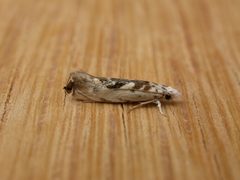
2- Erechthias minuscula(Caribbean Scavenger Moth)
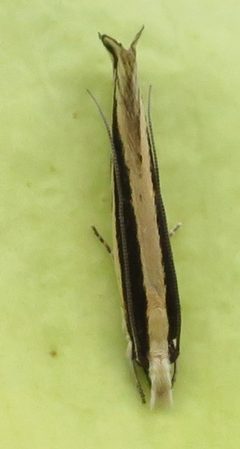
- Erechthias zebrina
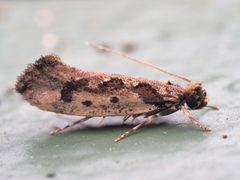
Erechthias is a of small in the Tineidae, comprising the type genus of Erechthiinae. The genus encompasses more than 150 with disputed circumscription, including several previously recognized genera now treated as synonyms. Species occur across tropical and subtropical regions worldwide, with some showing pan-global distributions while others are highly .
Pronunciation
How to pronounce Erechthias: //ɛˈrɛkθiːəs//
These audio files are automatically generated. While they are not always 100% accurate, they are a good starting point.
Identification
Erechthias sensu stricto is distinguished from related by having all wing separate (hindwing veins 5 and 6 not stalked) and the clasper's harpe nude rather than bearing a cluster of setae on the . Female genitalia appear nearly identical across the genus and related , making -level identification challenging. The genus has been historically confused with Tinea, Acridotarsa, Mesopherna, Cosmopteryx, and Argyresthia due to superficial similarities.
Images
Habitat
Found in diverse terrestrial including forested areas, coastal zones, and seabird nesting sites. Some occupy highly restricted habitats: E. darwini is to St. Paul's Rocks (less than 2 ha), while E. nidumicola inhabits wedge-tailed shearwater nests on oceanic islands.
Distribution
Predominantly Indo-Pacific distribution with pantropical elements; occurs in Africa, Asia, Australia, Pacific islands, and the Americas. Some are pan-global (E. zebrina), others to single island systems (E. itoi to Ogasawara Islands, E. darwini to St. Paul's Rocks).
Diet
Larvae are predominantly detritivorous, feeding on dead plant tissues including dead leaves, branches, and wood bark. Some feed on living plant tissues, lichens, or bat guano. E. nidumicola larvae have been collected from seabird nests where they probably feed on seaweed.
Host Associations
- Puffinus pacificus - wedge-tailed shearwater nests used by E. nidumicola
Ecological Role
contributing to decomposition of dead plant material in forest and coastal .
Similar Taxa
- DecadarchisHindwing 5 and 6 stalked; clasper's harpe bears setae on
- EreunetisFrequently considered separate based on genitalic differences
- ComodicaIntermediate ; delimitation still unresolved
- TineaHistorical misidentification of Decadarchis group members
- CosmopteryxE. cyanosticta initially mistaken for this unrelated cosmet
- ArgyresthiaE. zebrina initially mistaken for this unrelated ermine moth
More Details
Taxonomic history
The has undergone extensive synonymization, with eleven genera synonymized in a 1983 revision and additional genera including Caryolestis, Nesoxena, Pantheus, Lepidobregma, and Neodecadarchis now treated as synonyms. E. glyphidaula caused particular confusion, with Edward Meyrick establishing three new genera for this single .
Etymology
E. beeblebroxi is named after Douglas Adams's character Zaphod Beeblebrox, referencing the 's 'false ' pattern that presumably confuses .